Motor vehicle fraud is becoming increasingly common and takes many different forms. As scammers become more sophisticated, it becomes more difficult to avoid falling victim to a scam. We want to help you become a savvy consumer and hopefully protect yourself and protect some of your biggest assets: your vehicles.
One way you can protect yourself when buying or selling a vehicle is to use the checklists on our Buying and Selling a Vehicle webpage.
Below are some of the most common types of motor vehicle fraud. We’ve included tips for how to spot these types of fraud, and what to do if you think you might be a fraud victim.
Title Fraud
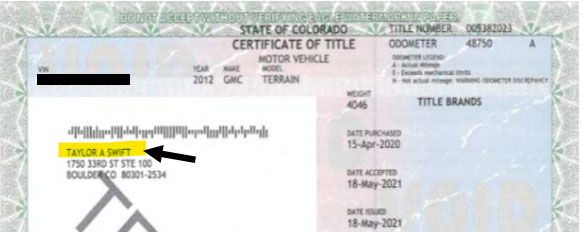
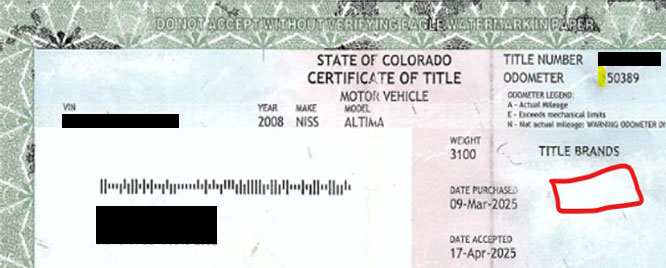
Title fraud occurs when someone changes a title or vehicle to misrepresent or obscure facts about the car or who owns it. They might change the mileage on a title, change the vehicle identification number (VIN), or change the “brand” of a title (e.g. removing a salvage brand). Purchasing a vehicle from an individual can mean you get a good deal, but you should take extra steps to make sure the deal isn’t too good to be true.
Odometer Fraud
Odometer fraud is the disconnection, resetting, or alteration of a vehicle’s odometer with the intent to change the number of miles indicated. NHTSA estimates that more than 450,000 vehicles are sold each year with false odometer readings.
Fake Dealership and Government Websites
Customers should always be on the lookout for websites that appear to offer DMV services but are not affiliated with the Colorado DMV. These third-party sites often display sponsored ads or small disclaimers — typically at the top or bottom of the page — stating they are not connected to any government agency.
Additionally, recent reports from nearby states highlight growing online dealership scams targeting customers shopping for vehicles. Fraudulent websites may mimic legitimate dealerships or operate solely online, offering deals that seem too good to be true. In one case, a buyer wired money for a “great deal” and traveled out of state to pick up the vehicle, only to discover the dealership was fake and the seller had vanished.
Emissions Fraud
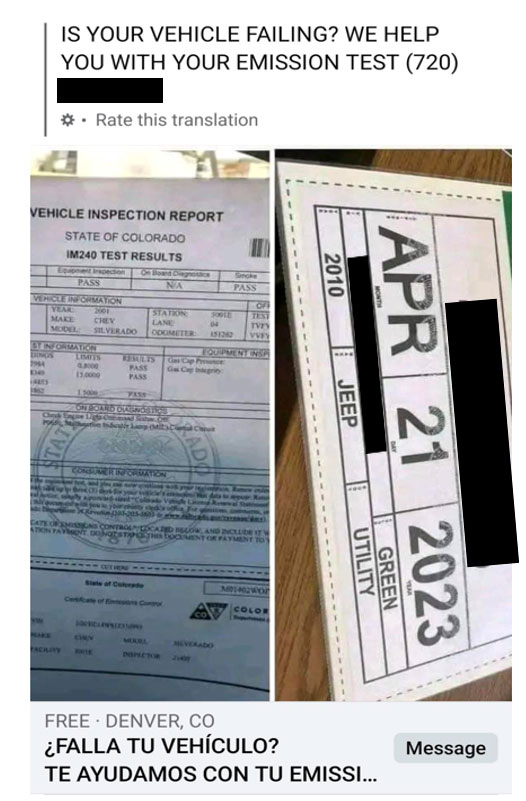
Emissions fraud can include using devices to cheat an emissions test, falsifying an emissions certificate, or tampering with a vehicle’s emissions control system. Colorado law requires a new emissions inspection when a gas-powered vehicle that is seven years old or older changes ownership (four years or older if diesel-powered). If you are purchasing a vehicle that requires emissions testing, you must have a valid, unused passing emissions certificate in order to register it.
Tampering with emissions systems is prohibited under both state and federal law, regardless of whether a vehicle is registered in an emissions-required area. Unfortunately, fraudulent emissions certificates have become more common. Some individuals who fail their emissions test may attempt to purchase a counterfeit passing certificate online and present it at the DMV.
License Plate and Document Fraud
Leaving your license plates on a sold vehicle or storing your title inside your car can put you at risk for fraud and liability. Plates (including temporary plates) are tied to the registered owner, so they can be used to rack up tolls, receive tickets, or even be linked to criminal activity. Similarly, keeping your vehicle title in the car makes it vulnerable to theft, which could allow someone to attempt a fraudulent transfer of ownership.