


Stage 2 Fire Restrictions Enacted for Western Boulder County; Stage 1 Fire Restrictions Enacted for Eastern Boulder County.

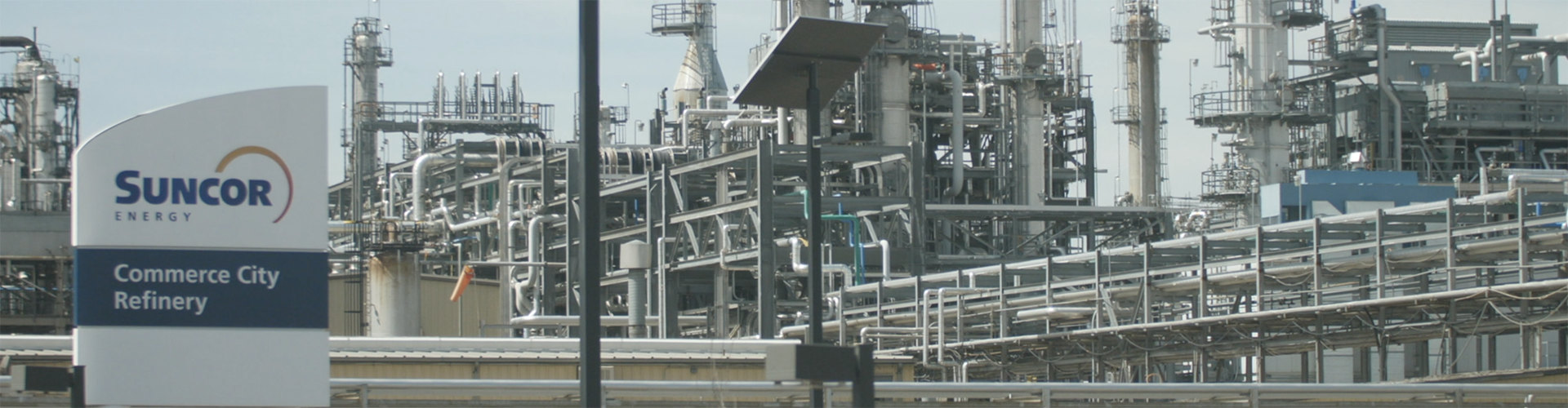
Suncor refinery center in denver

Climate Lawsuit

Logos for Boulder County, City of Boulder, San Miguel County, and EarthRights International

Case Overview

Boulder County and the City of Boulder are pursuing a climate accountability lawsuit seeking to ensure fossil fuel companies pay their fair share for climate-driven harms affecting local communities.

The case centers on this question: Who should bear the rising costs of climate impacts on Colorado? Right now, families and taxpayers are paying the price for the climate impacts we are facing, but they shouldn’t shoulder the burden of these costs alone. The lawsuit is not about regulating emissions or stopping fossil fuel production, but about seeking accountability for climate-related damages.

Colorado is already experiencing more extreme heat, wildfires, drought, and poor air quality, all of which create significant public costs. Since 2018, the lawsuit against ExxonMobil and Suncor has survived repeated attempts by the companies to move or dismiss it, clearing both a district court and the Colorado Supreme Court. Now the fossil fuel companies are asking the U.S. Supreme Court to intervene. The outcome carries local and national implications for climate accountability.

Case History

On April 17, 2018, the Colorado communities of Boulder County, San Miguel County, and the City of Boulder — with legal support from EarthRights International, the Hannon Law Firm, and Niskanen Center — filed a lawsuit against Suncor and ExxonMobil, two oil companies with significant responsibility for climate change.

Common Questions

Rising temperatures threaten these communities’ safety and way of life.

  • Since 1983, average temperatures in Colorado have risen more than 2o F and are continuing to warm, according to a report from the University of Colorado.
  • More heat waves, more destructive wildfires, more severe droughts, and changing precipitation.
  • These communities will likely experience more severe infestations of mountain pine beetles and other insects, reduced snowpack, earlier spring runoff from snow in the mountains, greater rainfall intensity, and worse ground-level ozone.
  • Climate change will affect fragile mountain ecosystems and hit at the heart of the local economy, damaging roads, forests, homes, the agricultural sector, the ski industry, and open space.
  • Adapting to such a wide range of impacts requires local governments to undertake unprecedented levels of planning and spending.

For more information on climate impacts, read the report from Resilient Analytics.

Over the next few decades, these communities will need to spend more than one hundred million dollars to respond to climate change.

For years, all three communities have taken action to reduce their own carbon footprints. All three have adopted ambitious CO2 emission reduction targets, passed budgets for climate work, conducted greenhouse gas (GHG) inventories, and established incentive programs for residents.

Despite these efforts, taxpayers already face the rising costs of adapting to a changing climate. Examples of recent costs include:

  • Wildfire prevention and rehabilitation programs
  • Water efficiency improvements on irrigated agricultural land
  • Expert studies to assess climate vulnerabilities
  • Repairs to damaged roads and infrastructure

Over the coming decades, the impacts of climate change will become increasingly severe and costly.

Suncor and Exxon are two of the world’s largest contributors to climate change and have worked closely together in Colorado.

  • According to the United Nations, fossil fuel combustion accounted for nearly 80% of all GHG emissions between 1970 and 2010.
  • Exxon is the largest investor-owned fossil fuel producer in the world.
  • Suncor is one of the world’s largest independent energy companies.
  • Both are active in Colorado. Suncor’s U.S. operations are based in Denver, Colorado; the company supplies about 35 percent of the state’s gasoline and diesel fuel demand.
  • Suncor and Exxon work closely together in Colorado to market and sell fossil fuels.
  • Suncor and Exxon are responsible for more billions of tons of GHG emissions.

The communities are not suggesting that Suncor and Exxon are the only ones responsible for climate change. Given the seriousness of the climate crisis, the communities are using multiple approaches to address the threats that they face. The lawsuit is an additional tool, not a substitute for local environmental protections and climate action.

The purpose of this lawsuit is to ensure that these companies pay their fair share of the climate impacts for which they are responsible. This is a question for the courts, not the federal government. The communities have not asked the court to stop or regulate the future production of fossil fuels in Colorado. The federal government also has a responsibility to prevent and mitigate climate change, of course, and these communities support efforts to ensure that the federal government appropriately uses its authority to address the climate crisis.

  • For more than 50 years, these oil companies have known about the harm that their products would cause to communities, but have chosen to continue business as usual.
  • In 1968, a report from industry scientists warned these companies that “significant temperature changes are almost certain to occur by the year 2000” due to rising GHGs, and that “the potential damage to our environment could be severe.”
  • By the 1970s, Suncor and Exxon knew with high certainty that their products were dangerous and that inaction would cause dramatic, or even catastrophic, changes to the climate.
  • Exxon took measures to protect itself from climate change: for example, the company adapted its own facilities to protect from sea level rise.
  • Yet Suncor and Exxon chose to conceal this knowledge from the public, in order to continue promoting and selling fossil fuels. And worse, they both participated in efforts to spread doubt about climate change and discredit the scientific voices that they knew were telling the truth. This helped to delay the shift to a low-carbon economy by decades.

This is a complex lawsuit and could take years to resolve. For this reason, the communities are not waiting to respond to climate change. The lawsuit is only one part of a larger strategy. But as the climate continues to change, local taxpayers are fronting the bill. The communities hope this lawsuit will shift some of the costs back onto Exxon and Suncor.

The local governments prioritize spending taxpayer dollars in a cost-conscious manner. There will only be nominal costs associated with the lawsuit. Most of the legal work will come from attorneys associated with nonprofit organizations like EarthRights International who are working on a pro bono basis. These attorneys will be assisted by private law firms who will need to put in a substantial amount of work in order to win the case. The private firms have agreed to be paid only if they win the case, in which case they would receive up to 20 percent of the award. The local communities have devoted salaried staff time to work on the lawsuit, but will not be paying for outside counsel.

Similar lawsuits are currently proceeding in California and New York, but this is the first such lawsuit in Colorado—or anywhere in the U.S. interior. Several similar lawsuits are currently making their way through the courts. Each lawsuit is unique and will need to be examined on its individual merits. However, past public interest lawsuits—such as those against the tobacco industry in the 1990s—have successfully held powerful companies to account for harm caused to people’s health and environment.

This document was prepared in April 2018 using information from the plaintiffs’ legal complaint. To learn more about this lawsuit as it progresses, please visit the website of EarthRights International. To learn more about the ways that these communities are responding to climate change, please visit the websites of Boulder County, San Miguel County, and the City of Boulder.

Contact Us

Commissioners’ Office

303-441-3500
commissioners@bouldercounty.gov

Commissioners' website

Location

Commissioners’ Office
Boulder County Courthouse
Third Floor
1325 Pearl St.
Boulder, CO 80302

Hours: 8 a.m. - 4:30 p.m.
Monday - Friday

Mailing Address

P.O. Box 471
Boulder, CO 80306