

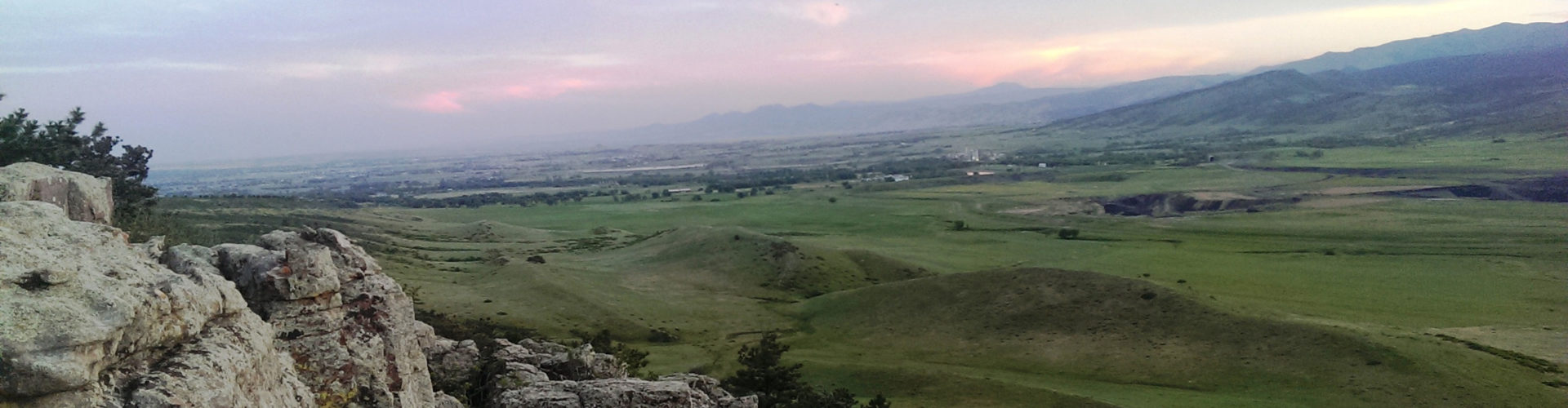
Ron Stewart Preserve at Rabbit Mountain sits at the easternmost point of the foothills in Boulder County. The preserve is rich in human history, geology, and plant and animal life.
Ron Stewart Preserve at Rabbit Mountain
Trails
-
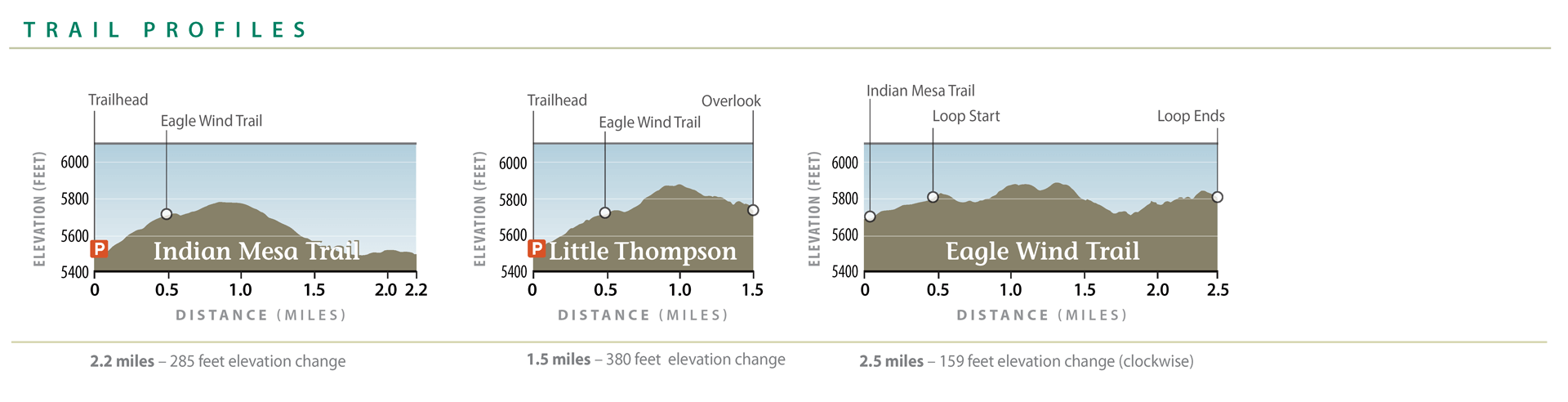
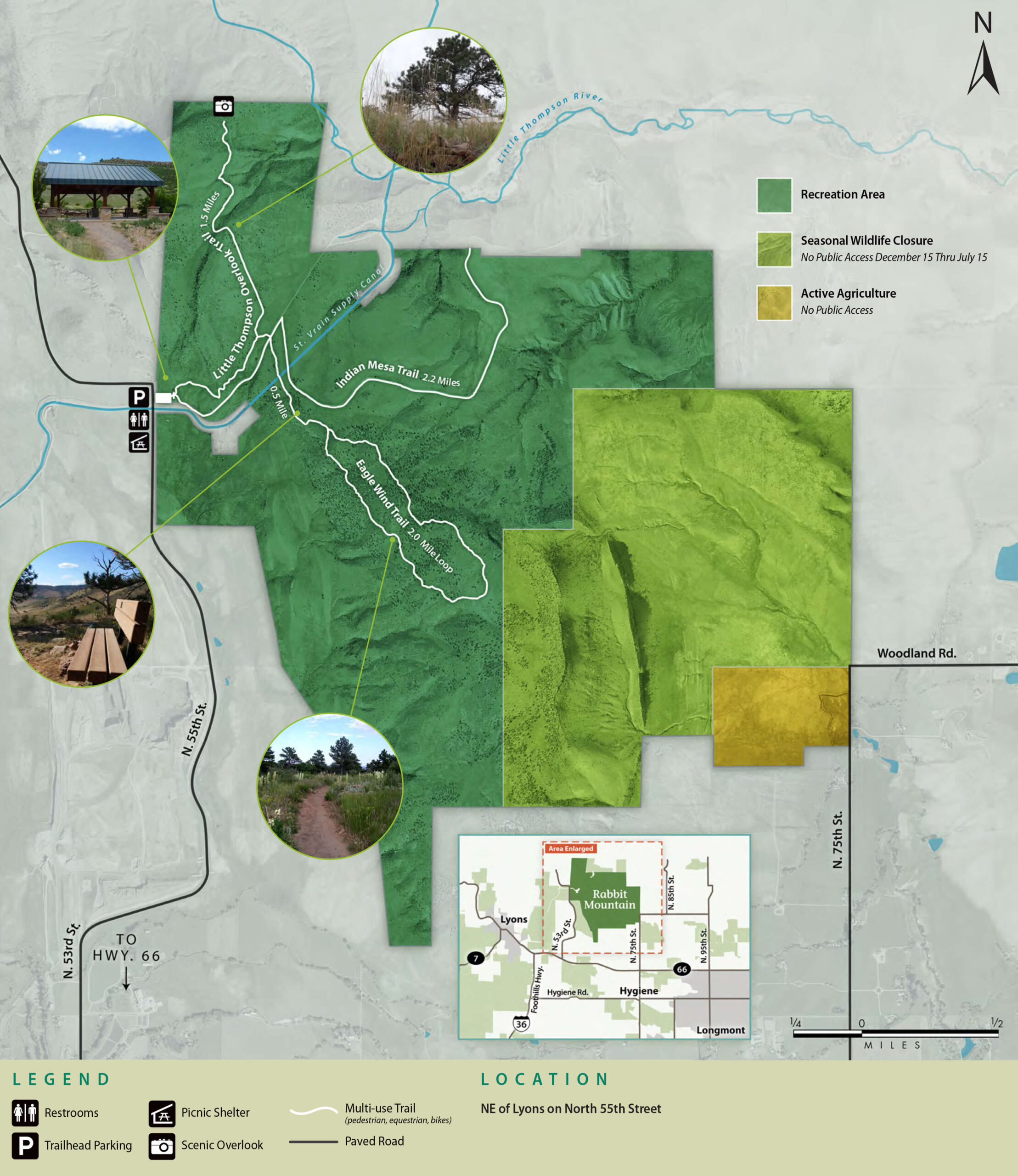
Eagle Wind Trail
2.5 miles – Moderate


-
Indian Mesa Trail
2.2 miles – Easy -
Little Thompson Overlook Trail
1.5 miles – Moderate
Rules & Regulations

Day Use Only

Pets On Leash

Bikes On Designated Trails Only

No Open Fires

No Hunting/Firearms

No Camping
Trailhead Amenities

38 car parking spots

3 ADA parking spots (1 van accessible)

Restroom near trailhead

Several picnic tables near trailhead

30 person group shelter

4 horse trailer parking spots
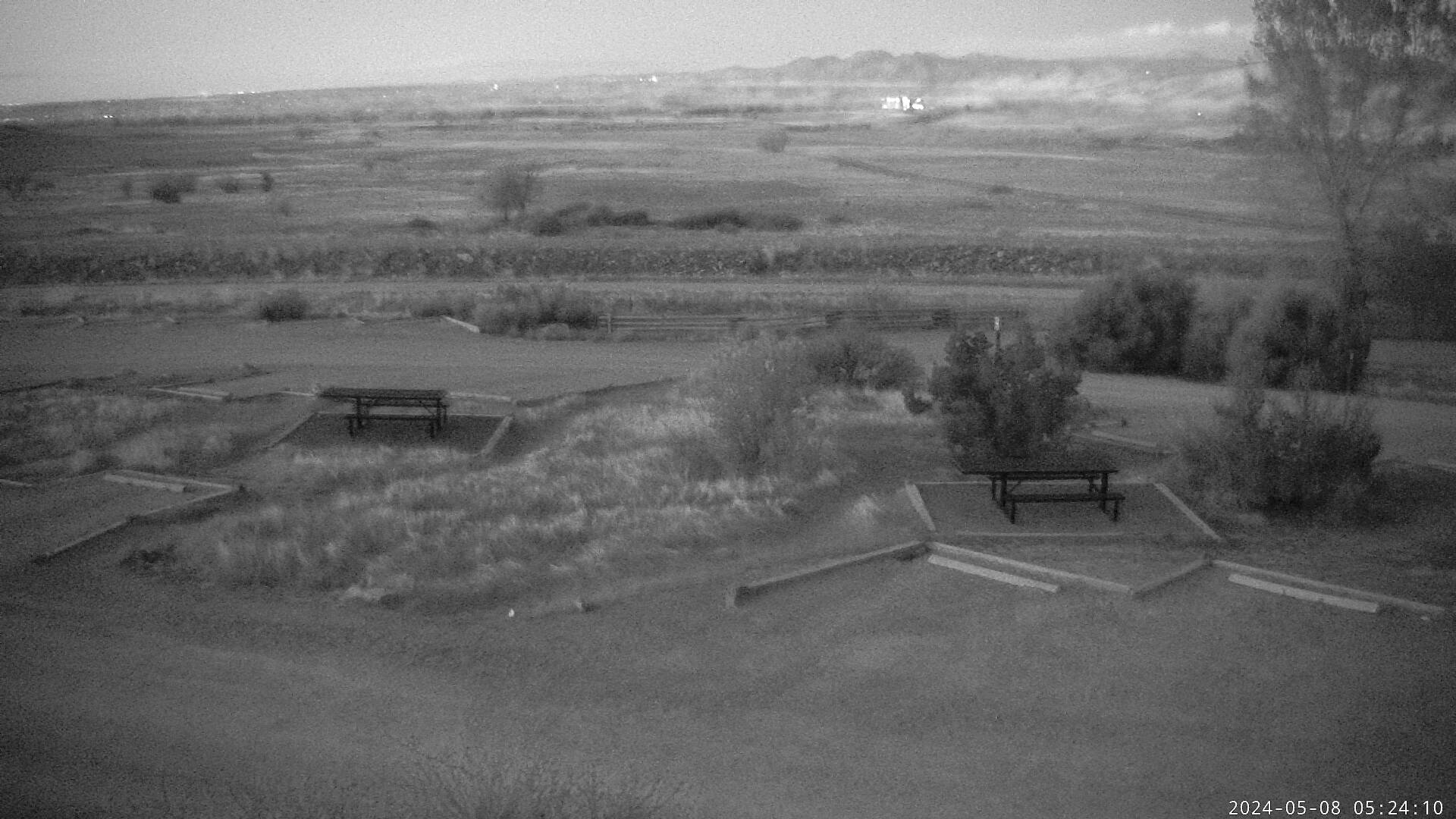
Live view of the parking lot
Photos
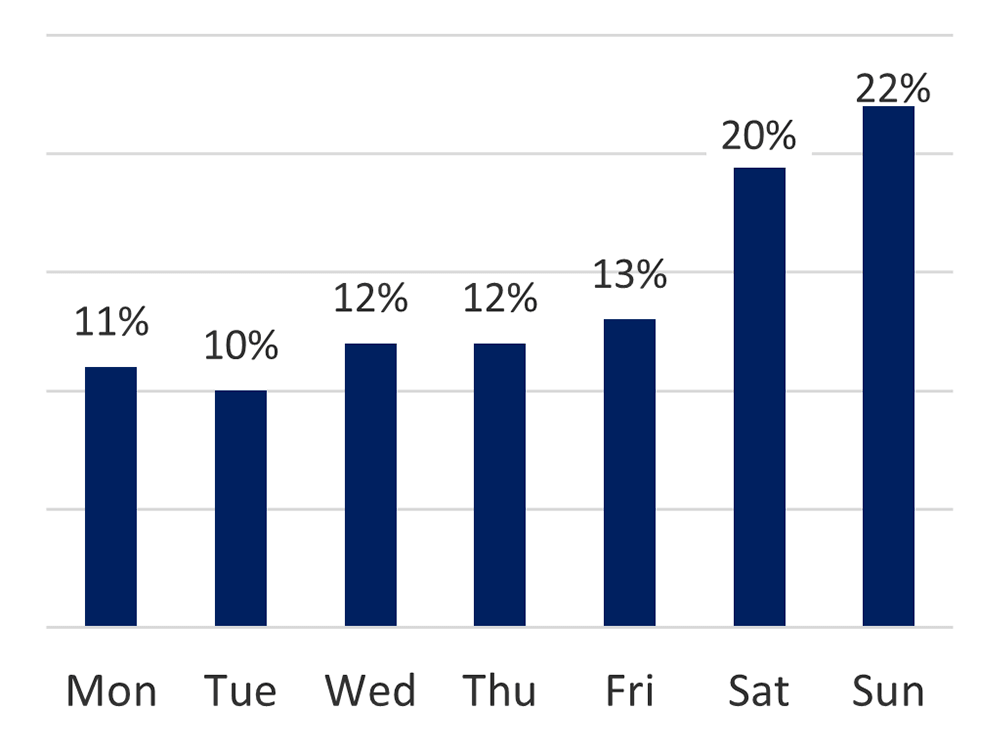
Open Gallery in New WindowVisitation by Day of Week
Visitation by Hour

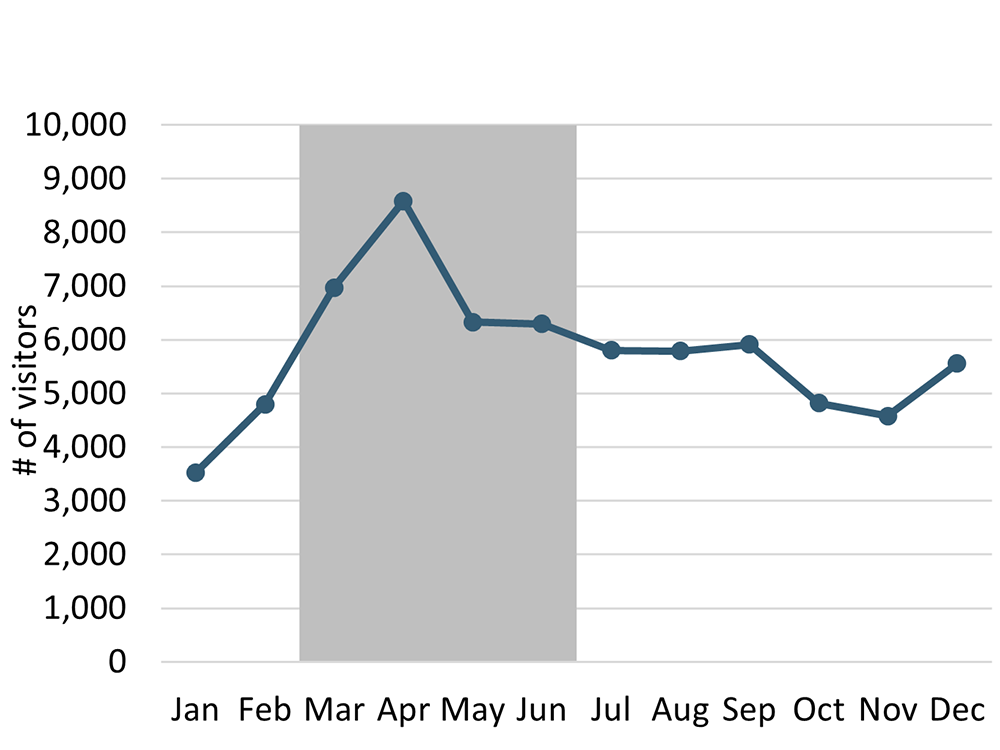
Visitation by Month
Along Colorado’s Front Range, the grasslands of the Great Plains rise to meet the peaks of the southern Rocky Mountains. The foothills form where they meet. This transition zone reflects change in both land and life. The preserve covers 2,871 acres. Its grasslands, shrublands, and forests provide habitat for many kinds of wildlife.
Elk Management
Limited hunting was allowed at the preserve for eight years. The program met its goals, and hunting is not needed in the foreseeable future. Learn more about the Elk and Vegetation Management Plan.
Mammals
- Black bear
- Black-tailed prairie dog
- Bobcat
- Coyote
- Deer mouse
- Desert cottontail
- Elk
- Mexican wood rat
- Mule deer
- Rock squirrel
- Thirteen-lined ground squirrel
Birds
- American crow
- American goldfinch
- American kestrel
- American robin
- Black-billed magpie
- Blue-gray gnatcatcher
- Chipping sparrow
- Cliff swallow
- Common nighthawk
- Common raven
- Dark-eyed junco
- Downy woodpecker
- Golden eagle
- House wren
- Lark sparrow
- Lazuli bunting
- Mountain bluebird
- Mourning dove
- Northern flicker
- Red-tailed hawk
- Rufous-sided (spotted) towhee
- Solitary vireo
- Turkey vulture
- Western meadowlark
- Western wood-pewee
- Yellow-breasted chat
Reptiles
- Bullsnake
- Prairie rattlesnake
- Racer
White Wildflowers
- Fleabane daisy (Erigeron spp)
- Milk vetch (Astralagus spp)
- Prickly poppy (Argemone polyarihmos)
- Sand lily (Leucocinum montanum)
- Spring beauty (Claytonia lanceolata)
- Stemless evening primrose (Oenothera caespitosa)
- White onion (Allium textile)
- Winged buckwheat (Eriogonum alatum)
Yellow Wildflowers
- Blanket flower (Gaillardia aristata)
- Coneflower (Ratbida columnifera)
- Gumweed (Grindelia squarrosa)
- Hairy goldenaster (Heterotheca villosa)
- Prickly pear cactus (Opuntia compressa)
- Whiskbroom parsley (Harbouris trachypleura)
- Yellow evening primrose (Oenothera sp)
Pink, Orange & Red Wildflowers
- Ball cactus (Coryphanta vivipara)
- Copper mallow (Sphaeralcea coccinea)
- Fleabane (Erigeron spp)
- Wild geranium (Geranium caespitosum)
Purple & Blue Wildflowers
- Colorado loco (Oxytropis lambertii)
- Common harebell (Campanula rotundifolia)
- Lambert’s locoweed or Colorado locoweed (Oxytropis lambertii)
- Plains larkspur (Delphinium virescens)
- Spiderwort (Tradescontia accidentalis)
Green Wildflowers
- Fringed sage (Artemisia frigida)
- Prairie sage (artemisia ludoviciana)
Shrubs
- Mountain mahogany
- Rabbitbrush
- Skunkbush
- Wax currant
- Yucca
Trees
- Rocky Mountain juniper
- Ponderosa pine
About 140 million years ago, this area was a tropical lowland covered by rivers, swamps, and lagoons. An inland sea covered much of Colorado for millions of years.
The sea retreated around 65 million years ago, when forces deep within the earth began to lift the Rocky Mountains. These forces strained the rocks in the area and caused them to break. Movement along a break like this is called a fault. A major fault crosses the north end of the property. Slippage along area faults moved the preserve three miles east of the main hogbacks of the foothills. Because of this location, you can see Rabbit Mountain from three counties.
Native Peoples
Rabbit Mountain was an ideal winter home for the Arapaho people. It offered shelter from strong west winds, edible plants, water from natural springs, and plentiful game. Chief Niwot of the Arapaho may have spent time in the area.
Homesteaders Arrive
In the mid-1800s, homesteaders claimed land in the area, hoping to find gold. Few found it, and many turned to farming instead. Their arrival displaced the Arapaho and other Native American peoples from Rabbit Mountain and across the state.
Western Water
In 1959, the St. Vrain Supply Canal across Rabbit Mountain was built as part of the Colorado-Big Thompson Project. The project still operates today. It carries water through the mountains from the wetter western slope to the drier Front Range.
Acquisition
Jack Moomaw, a forest ranger, wanted to preserve wild areas, including Rabbit Mountain. His granddaughter sold Rabbit Mountain to Boulder County in 1984. Because of this purchase, Rabbit Mountain will stay in its natural state for generations to enjoy.