

Blue-Green Algae in Boulder County
When in Doubt, Stay Out!
Blue-green algae has been confirmed in Colorado lakes and ponds for the past few years. Be cautious of algae blooms in lakes and ponds. They can cause illnesses in humans and pets. Boulder County does not test for blue-green algae.
Not all algae is harmful to humans or pets, but the best way to keep your family safe during an algae bloom is to:
- Stay out of the water, including children and pets.
- Avoid drinking the water. Blue-green algae can cause distress in humans and is potentially lethal to dogs.
- Avoid boating near or through algae blooms.
- Clean fish well and discard the guts appropriately.
- When in doubt, stay out!
Blue-Green Algae Health Risks
Not all algae seen in ponds and lakes is toxic. Cyanobacteria (a type of bacteria found in blue-green algae) may produce toxins that can be harmful to humans and dogs. Warmer temperatures, stagnant water, and nitrogen and phosphorus from fertilized lawns and other sources can lead to the growth of algae and cyanobacteria.
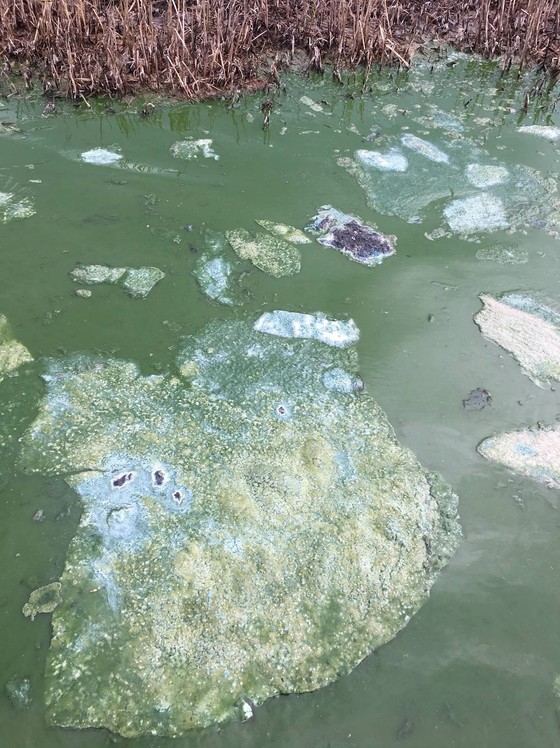
Blue-green algae blooms may look like thick pea soup or spilled bluish-green paint on the water’s surface. They can also create a dense mat of foam along the shoreline. The long, stringy, bright green strands that appear slimy, cottony, or mustard yellow are not harmful types of algae.
At lakes and ponds where dogs are allowed to enter the water, exercise caution if algae is present. Anglers should also exercise caution and follow state recommendations for thoroughly cleaning and properly disposing of the guts.
- Blue-Green Algae (CDPHE)