

Osprey Camera
Camera #1: Located above the nest.
Camera #2: Located on the ground looking up at the nest.
Comments must follow the Comment Policy.
View Archived Comments | View Current Comments in New Window
Osprey Camera Comment Policy
- Comments reflect the views of the author and do not necessarily reflect the official views of Boulder County, its office holders, or employees.
- Comments should be directly related to the Boulder County Fairgrounds Osprey Camera and nest activities.
- Please keep your comments related to this osprey nest. We understand that people like to watch other cameras and chat about them, but this chat section is intended to focus on this specific osprey nest. If you wish to comment about another nest, please do so in an educational way. Moderators will help refocus comments when necessary.
- Boulder County does not name the birds. We refer to the birds as male, female, and chick #1, chick #2, etc. Please refrain from using formal names to refer to the birds.
- Please post your screenshots, photos, or recorded video you have taken. Any screenshots, photos, or videos that are not directly related to the osprey camera may be deleted.
- Copyrighted and other proprietary material should not be posted unless permission to do so is clearly indicated.
- Boulder County reserves the right to delete any comment at its discretion and will delete comments that:
- Contain obscene, indecent, or profane content.
- Contain threats or defamatory statements.
- Contain hate speech directed at race, color, sex, sexual orientation, national origin, ethnicity, age, religion, or disability.
- Promote or endorse services or products.
- Contain images, links, or other content not directly related to the osprey camera.
- Promote or endorse ballot issues, candidates for public office or other campaign-related material, or non-county related events and programs.
- Users who violate this policy may be banned from future commenting.
Timeline
Non-Intervention
Boulder County has a strict non-intervention policy for ospreys and other raptors. Staff will not aid or assist raptors, including ospreys on nesting platforms.
Intervention causes extreme stress to raptors and can lead to injury or death. It is always best to limit disturbances to wild animals. Adding to the challenges they already face rarely improves their chances of survival.
In rare cases, wildlife biologists may decide that intervention is the right choice. This only happens when the benefit to the bird is clear and the risk to people is zero.
This camera offers a view into nature. It can sometimes show how difficult life in the wild can be.
Baling Twine
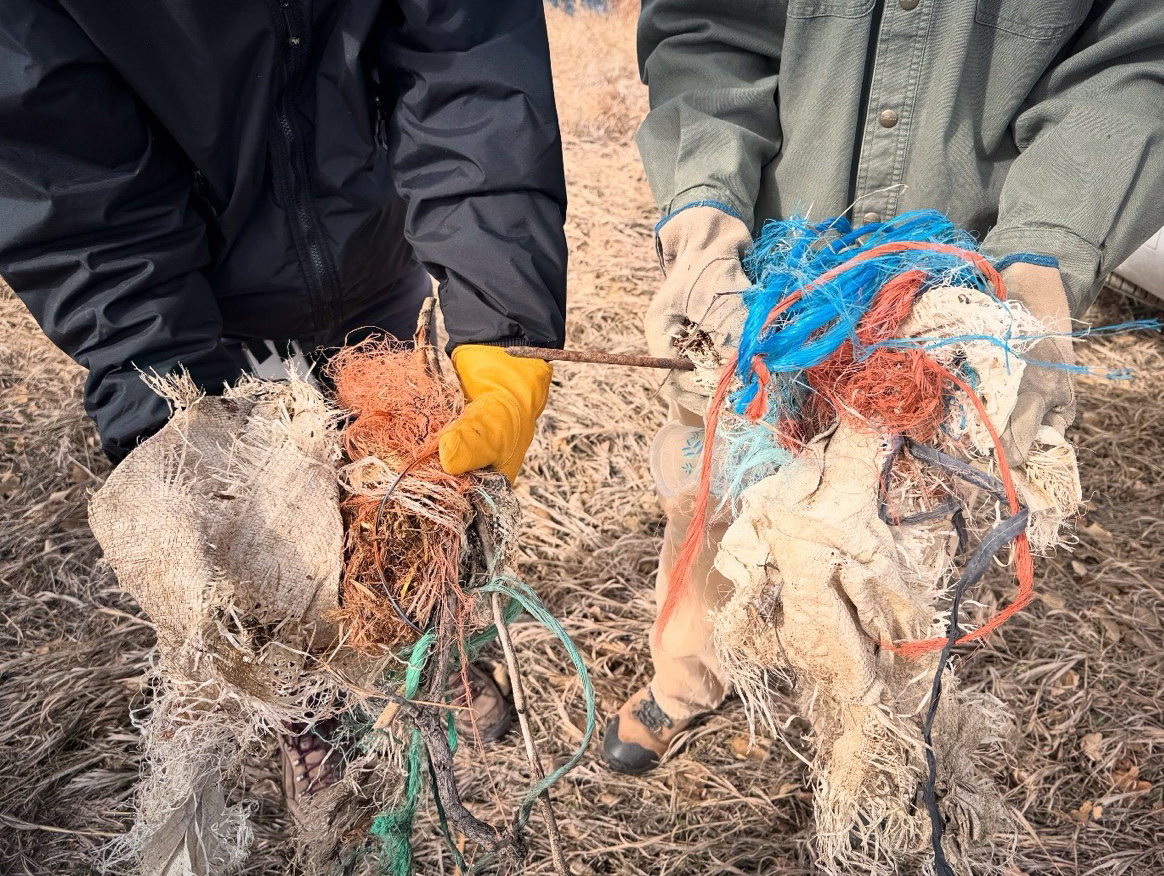
Ospreys are thriving in Boulder County, but they face dangers. Baling twine (also called baler twine) is a rope-like material used to bundle hay, straw, and other livestock feed. Ospreys collect it for their nests, but it can wrap around them and cause injury or death.
Please help protect ospreys by handling baling twine responsibly.
- Secure and dispose of baling twine properly: If you use baling twine for agricultural work, store it in a secure location where ospreys cannot reach it.
- Pick up stray twine when you see it: Throw it in the trash.
- Organize a cleanup: Consider organizing a cleanup day with friends or coworkers.
Fairgrounds Osprey
This is one of several osprey nests in Boulder County. In 2003, a pair of ospreys began nesting on a light pole at the Boulder County Fairgrounds and returned each year. In 2009, wildlife biologists moved the nest to its current location, just east of the Cattail Pond, for the birds’ safety. The pair adjusted to the new location easily.
See the interactive timeline for specific dates and other key events.
Camera Setup
Camera #1 is an Axis P5635-E MkII network camera that can pan, tilt, and zoom. A microphone under the camera records sound. The camera and microphone receive power from a building about 750 feet away. Video and audio are transmitted wirelessly.
Camera #2 is an Axis P5655-E network camera that can also pan, tilt, and zoom. It sits about 100 feet from the nest on the ground, pointing up at the nest. It uses the same audio source as Camera 1.
An infrared light illuminates the nest at night. A solar panel charges the light’s battery during the day. Ospreys cannot see infrared light, so the light does not disturb them.
A lightning rod, two lightning suppression units, and shielded cables protect the equipment from lightning strikes.

Donations
The Boulder County Parks & Open Space Foundation pays for ongoing maintenance and streaming costs. please consider making a donation of any amount.
About Osprey
Migration
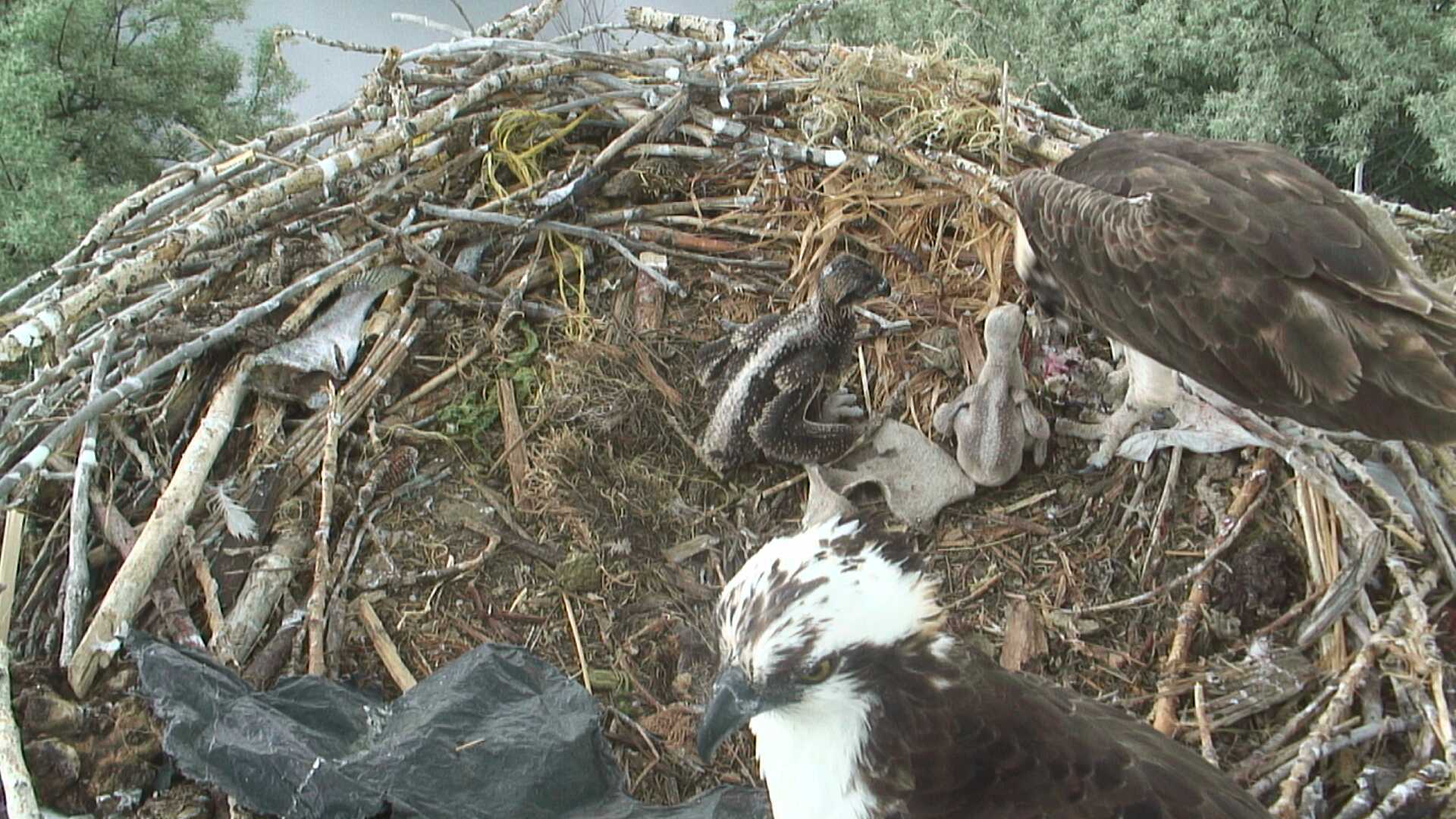
Ospreys migrate south every year to Central or South America. The male, female, and young each travel separately. The male and female spend winter apart but return to the same nesting site each year. Young ospreys usually stay at their wintering grounds for their entire first year before starting their own migration and nesting pattern.
Ospreys return to their nesting site in mid- to late March. Mating and laying eggs occurs in the first month after both birds have arrived. They leave in September after the chicks have fledged (grown their flight feathers and learned to fly).
Other birds use the platform year-round. Magpies and blackbirds have been seen on the platform even while ospreys are present. Geese, red-tailed hawks, bald eagles, great horned owls, and great blue herons have also been spotted on the nest.
Diet
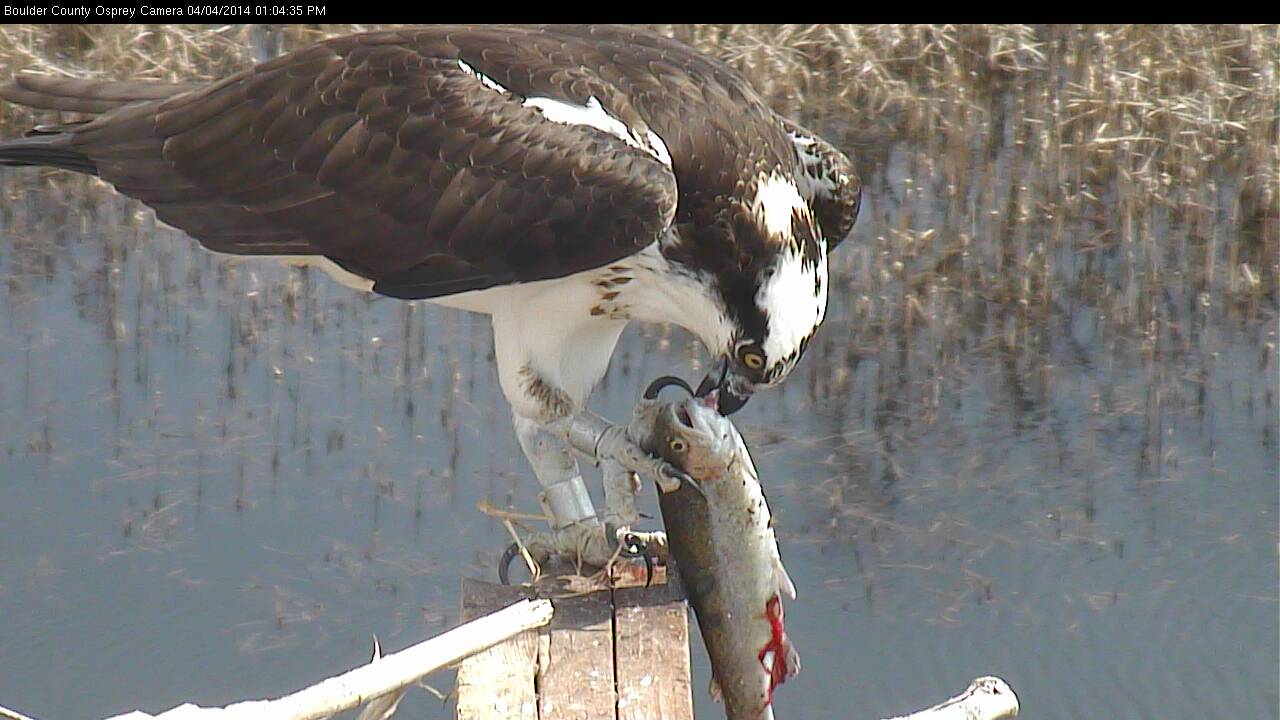
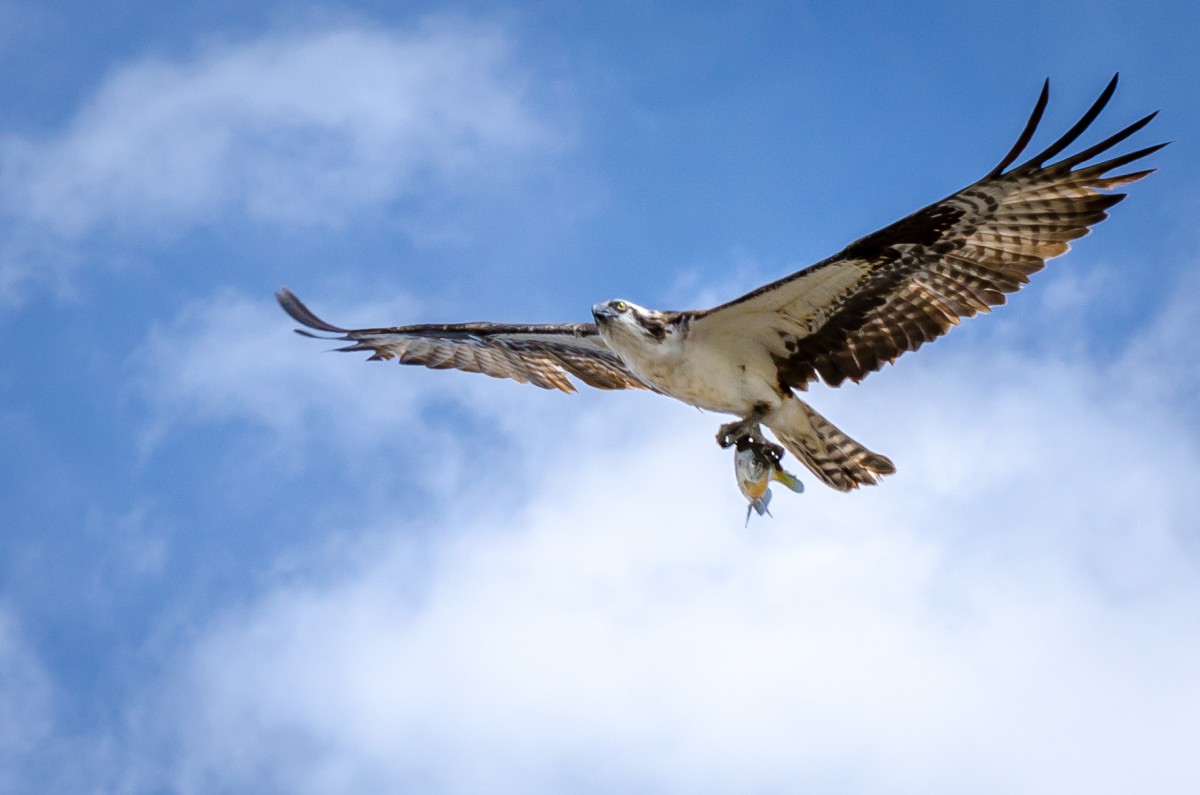
The osprey is the only local raptor that hunts fish exclusively. Ospreys sometimes look for fish from the nest. When a fish is spotted, an osprey dives into the water and submerges completely. Their dense, oily feathers help them lift out of the water and fly away. Ospreys are successful on the first dive just over half the time.
You can watch ospreys fish at several public locations in Boulder County, including Fairgrounds Lake, Twin Peaks Golf Course, Lagerman Reservoir, Izaak Walton Pond, Golden Ponds, and Pella Crossing.
The Nest

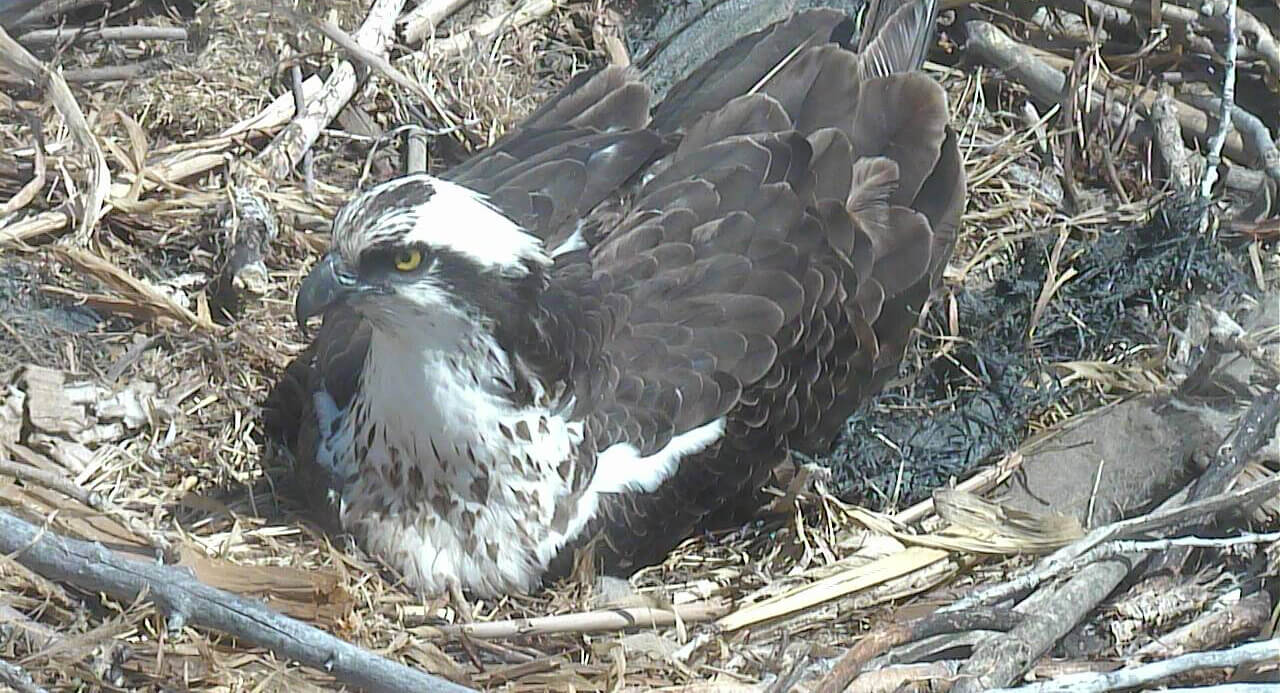
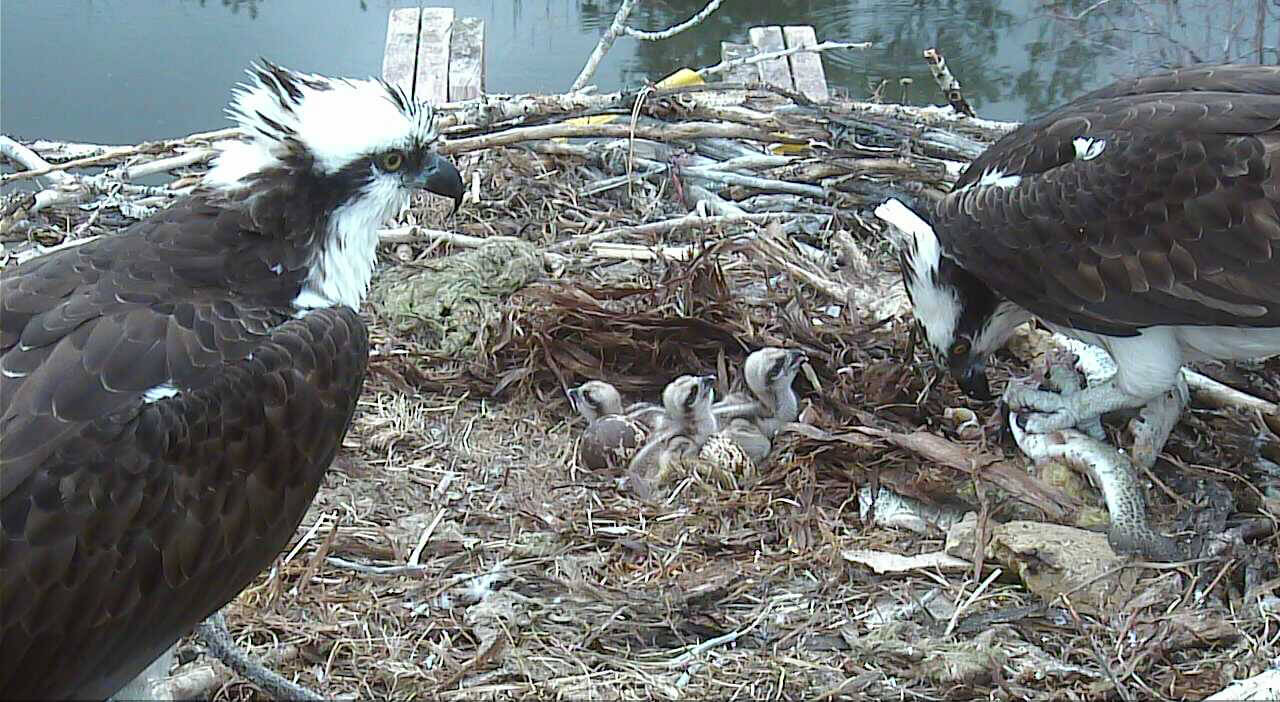
The nest is mainly used to raise young ospreys. Nests must be wide enough to support up to six full-grown birds. Osprey nests weigh an average of 400 pounds and are added to each year. Ospreys collect a wide variety of materials — including trash — to line their nests, keeping eggs cushioned and secure within the stick structure.
Osprey chicks have about a 50% chance of surviving their first year.
Ospreys sometimes build nests on power poles, which puts them at risk of electrocution. When this happens, Boulder County works with Colorado Parks and Wildlife and the utility company to build a safer nearby nesting platform.
Learn More
Learn more about ospreys at the Cornell Lab of Ornithology.
Problems Loading the Video
The live video feed is provided by YouTube. If your network, internet provider, or browser blocks YouTube, you may be unable to watch the live feed. Try opening the video directly on YouTube.
YouTube blocks live streams for users who have enabled Restricted Mode. Learn how to turn Restricted Mode on or off.