Mosquitoes are more than a bother. They can carry West Nile virus (WNV). Boulder County Public Health works to prevent illness in Boulder County.
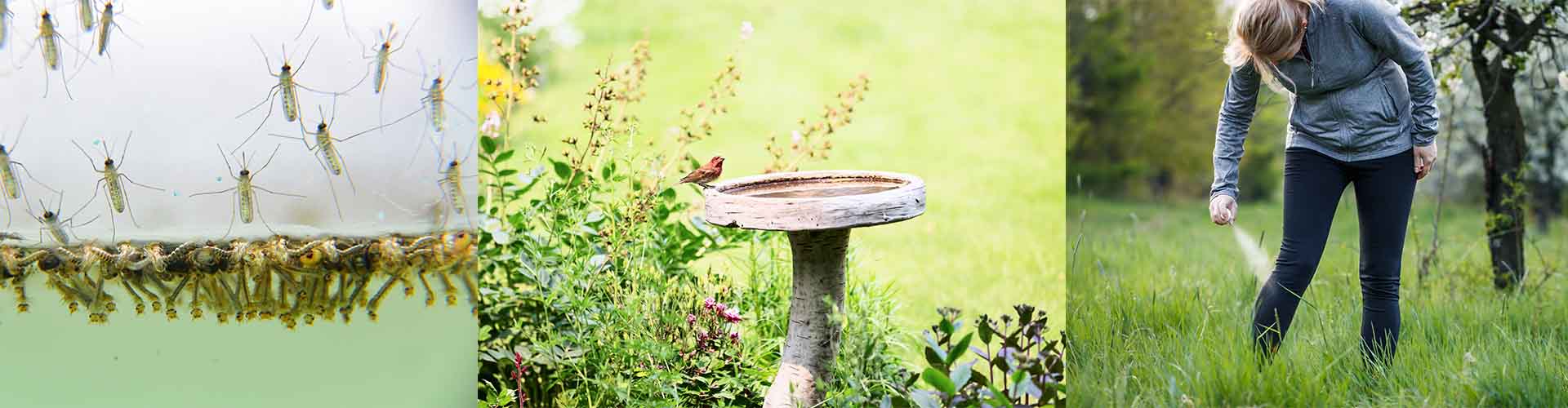
Mosquitoes and West Nile Virus Prevention
There is no treatment for West Nile virus, so it’s important to prevent it. West Nile can cause serious illness. Everyone should protect themselves against mosquito bites.
Use EPA-Approved Insect Repellent
Use insect repellents when you go outdoors.
Choose repellents containing:
- DEET
- Picaridin
- IR3535
Some oil of lemon eucalyptus and para-menthane-diol products provide the best protection.
Follow label instructions for all products. Limit outdoor activities at dusk and dawn, when mosquitoes are most active.
Find the Repellent that is Right for You
Wear Proper Clothing
Wear long pants, long-sleeved shirts and socks to protect yourself. Spray clothes with insect repellent for extra protection.
Avoid the Outdoors during Peak Mosquito Time
Reduce or eliminate outdoor activity between dusk and dawn. Most mosquitoes bite in the morning or evening.
During the daytime, mosquitoes rest in cooler, more humid areas, which helps protect them from drying out.
Control Mosquitoes Indoors and Outdoors
- Make sure windows are closed or have screens with no holes.
- Prevent mosquitoes from laying eggs around your home by draining standing water from items like birdbaths, kiddie pools, buckets, or gutters.
Farmers and Agricultural Landowners
- Keep irrigation ditches free flowing.
- Minimize standing water to less than four days in fields.
- Fill tire ruts and hoofprints to avoid puddles.
- Keep horse and cattle troughs clean by changing the water every four days.
- Vaccinate horses.
Residents dealing with mosquito issues in various cities can report problems to these contacts.
Within City Limits
- City of Boulder: Ecological Mosquito Management
- 303-441-1901
- Town of Lyons
- 303-823-6622
- All other Municipalities: Vector Disease Control International
- 303-466-1892
Outside City Limits
- Unincorporated Boulder County: Vector Disease Control International
- 303-466-1892
Spraying and Mosquito Concerns
- Boulder County Public Health: 303-441-1564
- COHelp Line: 1-877-462-2911
- Boulder County Public Health Hotline: 303-441-1460
Boulder County Public Health (BCPH) tracks mosquito populations to determine the risk to people.
BCPH has traps throughout Boulder County so that we can count the:
- Total number of mosquitoes
- Percentage of Culex mosquitoes (Culex is the species of mosquito that spreads WNV)
- Percentage of mosquitoes that test positive for West Nile virus
- Number of human cases
- Number of human deaths
Learn more about Culex mosquitoes (CDC)
Current Mosquito Activity in Boulder County
BCPH examines mosquitoes captured in traps throughout Boulder County, tracking the data for trends.
Current Total Mosquito Activity in Boulder County
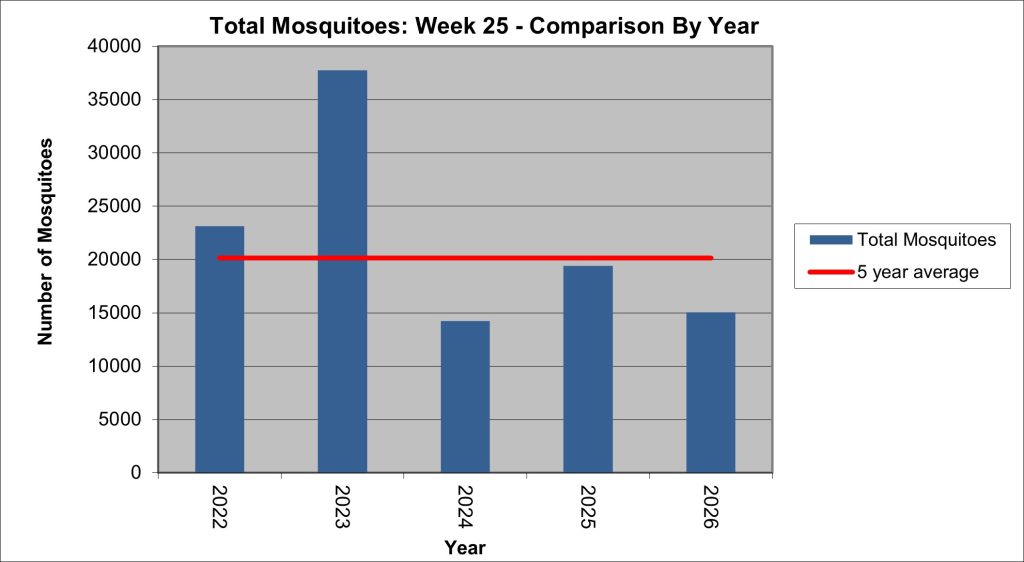
Total Mosquitoes: Weekly Comparison by Year
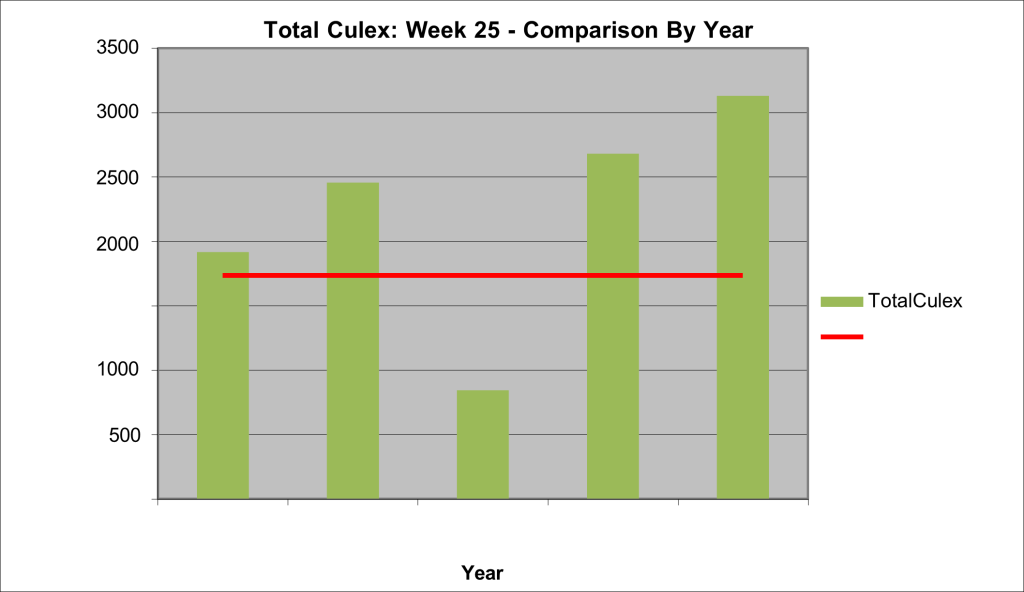
Total Culex: Weekly Comparison by Year
Mosquito Monitoring Data by Zone (Vector Index)
| - | Zone 1 | Zone 2 | Zone 3 |
|---|---|---|---|
| Week Ending On | Vector Index | Vector Index | Vector Index |
| June 20 (Week 23) | --- | --- | --- |
| June 27 (Week 24) | 0.00 | 0.00 | 0.00 |
| July 4 (Week 25) | 0.00 | 0.00 | 0.00 |
| July 11 (Week 26) | 0.00 | 0.00 | 0.00 |
| July 18 (Week 27) | - | - | - |
| July 25 (Week 28) | - | - | - |
| August 1 (Week 29) | - | - | - |
| August 8 (Week 30) | - | - | - |
| August 15 (Week 31) | - | - | - |
| August 22 (Week 32) | - | - | - |
| August 29 (Week 33) | - | - | - |
| September 5 (Week 34) | - | - | - |
| September 12 (Week 35) | - | - | - |
| September 19 (Week 36) | - | - | - |
Vector Index
The Vector Index, which measures the risk of virus spread, depends on the number of Culex pipiens and Culex tarsalis mosquitoes that are trapped and tested. Culex pipiens and Culex tarsalis mosquitoes are the two species that carry West Nile virus.
When mosquito testing shows reason for concern, we take action to reduce the number of mosquitoes by using:
- Larvicide is used to kill mosquito larvae before they become flying mosquitoes.
- Adulticide is a method of controlling the population of adult mosquitoes
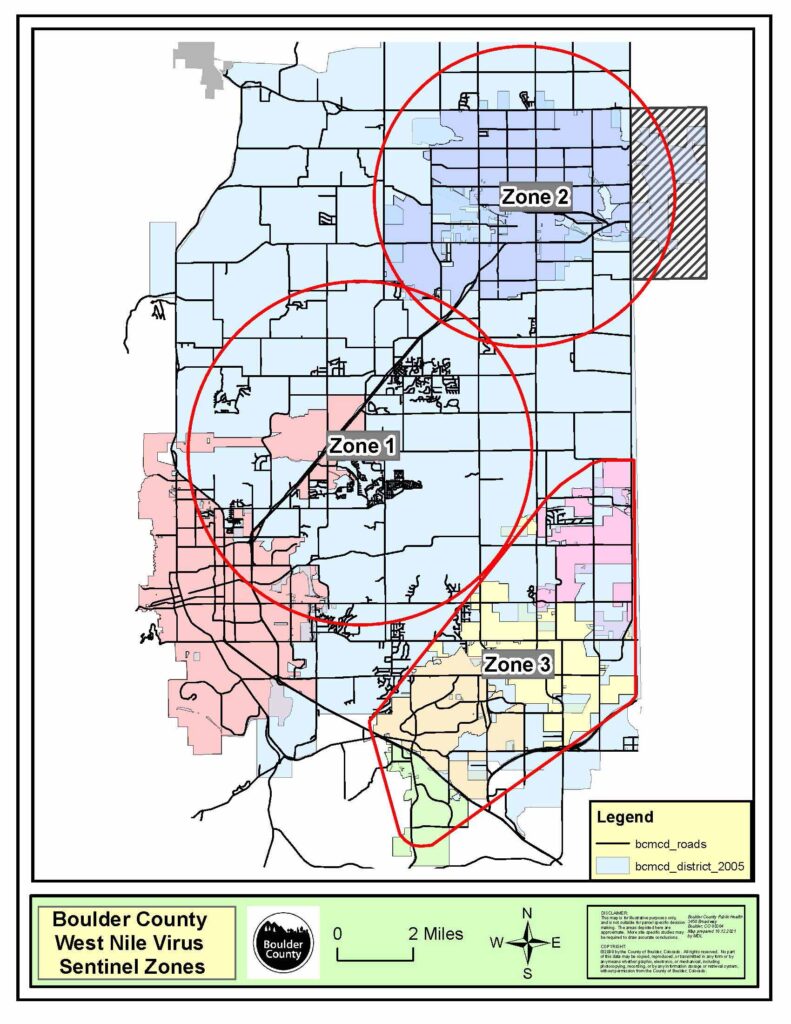
Map of Zones Where Mosquitoes Are Trapped
West Nile Data
BCPH uses a multi-pronged approach to controlling mosquitoes and preventing disease. This approach reduces mosquito populations while reducing negative impacts on the environment.
This approach focuses on preventing breeding by:
- Using natural solutions like bacteria
- Introducing native fathead minnows
- In cases of high mosquito numbers, permethrin, a synthetic chemical derived from the natural insecticide found in chrysanthemum flowers, is used cautiously to minimize environmental impact.
- More than 94% of the program is biological and physical control of mosquito larvae.
- Adult mosquito control comprises less than 6% of the program.
Annual Reports
BCMCD Survey Results
The Boulder County Mosquito Control District surveyed residents in 2011 to gather feedback on mosquito control practices. The responses overwhelmingly indicated that people want mosquito control to continue. Many stated that mosquitoes negatively impacted their ability to enjoy the outdoors.
Residential District
The Boulder County Mosquito District encompasses approximately 180 square miles of eastern Boulder County. Because the residents who live within this district pay for mosquito control services, Boulder County can only provide mosquito control services to those who live within the district.
The Boulder County Mosquito Control District (BCMCD) Program is overseen by a citizens’ advisory board appointed by the Boulder County Commissioners.
Boulder County Mosquito Control
- More than 94% of the program is biological and physical control of mosquito larvae before they become adults.
- Adult Mosquito Control comprises less than 6% of the program.
BCPH can help people who live in the Boulder County Mosquito Control District by:
- Answering questions and providing information on mosquito control.
- Investigating reports of mosquitoes or standing water.
- Excluding district residents’ properties from spraying, if requested.
- Notifying district residents before spraying in their neighborhoods.
- Providing spray schedules.
Mosquito control services in Boulder County are contracted to a company, Vector Disease Control International (VDCI).
West Nile virus (WNV) poses a significant health concern in Colorado. Approximately 20% of those infected may experience severe symptoms, ranging from fever and fatigue to more serious conditions like meningitis or paralysis.
These guidelines are provided to assist health care providers and educators with the recognition and diagnosis of illness due to West Nile virus (WNV).
- CDPHE West Nile Virus Information
Get general clinical information on WNV as well as professional resources for health care providers from the Colorado Department of Public Health and Environment. - CDC West Nile Virus Guidance for Clinicians
Access information from the Centers for Disease Control and Prevention on WNV, including:- Background
- Epidemiology
- Clinical Description
- Treatment
- Reporting
- West Nile Virus Fact Sheet
- Guidelines for Surveillance, Prevention and Control
Please feel free to download, reproduce, and distribute these materials.
One Bite Campaign
The One Bite campaign was developed in 2003 when Boulder County had an extreme number of people who contracted West Nile virus. A significant number of residents died or had long-term or permanent complications.
One Bite Poster
Flyers for Distributing at Events
- Cody Kinney West Nile Virus Alert
- Nancy Foster West Nile Virus Alert
- Shelley Bailey West Nile Virus Alert
- Michael Paquin West Nile Virus Alert
Flyer for Mailings
Contact Us