

Boulder County’s Publication B‑30 Safety Glazing outlines the requirements for building permits, detailing where materials like tempered or laminated glass must be used in construction projects. Based on sections R308.1 and R308.4 of the, 2021 International Residential Code (IRC) these guidelines cover hazardous locations in residential and commercial buildings to reduce the risk of injury.
Scam emails have been impersonating Boulder County Community Planning and Permitting staff. Learn how to spot a scam email.
Boulder County Planning Publications
Safety Glazing B30
Window Replacement
New windows and window replacements shall comply with the safety glazing requirements.
R308.1 Identification.
Except as indicated in Section R308.1.1 each pane of glazing installed in hazardous locations as defined in Section R308.4 shall be provided with a manufacturer’s designation specifying who applied the designation, the type of glass and the safety glazing standard with which it complies, and that is visible in the final installation. The designation shall be acid etched, sandblasted, ceramic-fired, laser etched, embossed, or be of a type that once applied cannot be removed without being destroyed. A label shall be permitted in lieu of the manufacturer’s designation.
Exceptions:
-
- For other than tempered glass, manufacturer’s designations are not required provided that the building official approves the use of a certificate, affidavit or other evidence confirming compliance with this code.
- Tempered spandrel glass is permitted to be identified by the manufacturer with a removable paper designation.
R308.4 Hazardous locations.
The locations specified in Sections R308.4.1 through R308.4.7 shall be considered to be specific hazardous locations for the purposes of glazing.
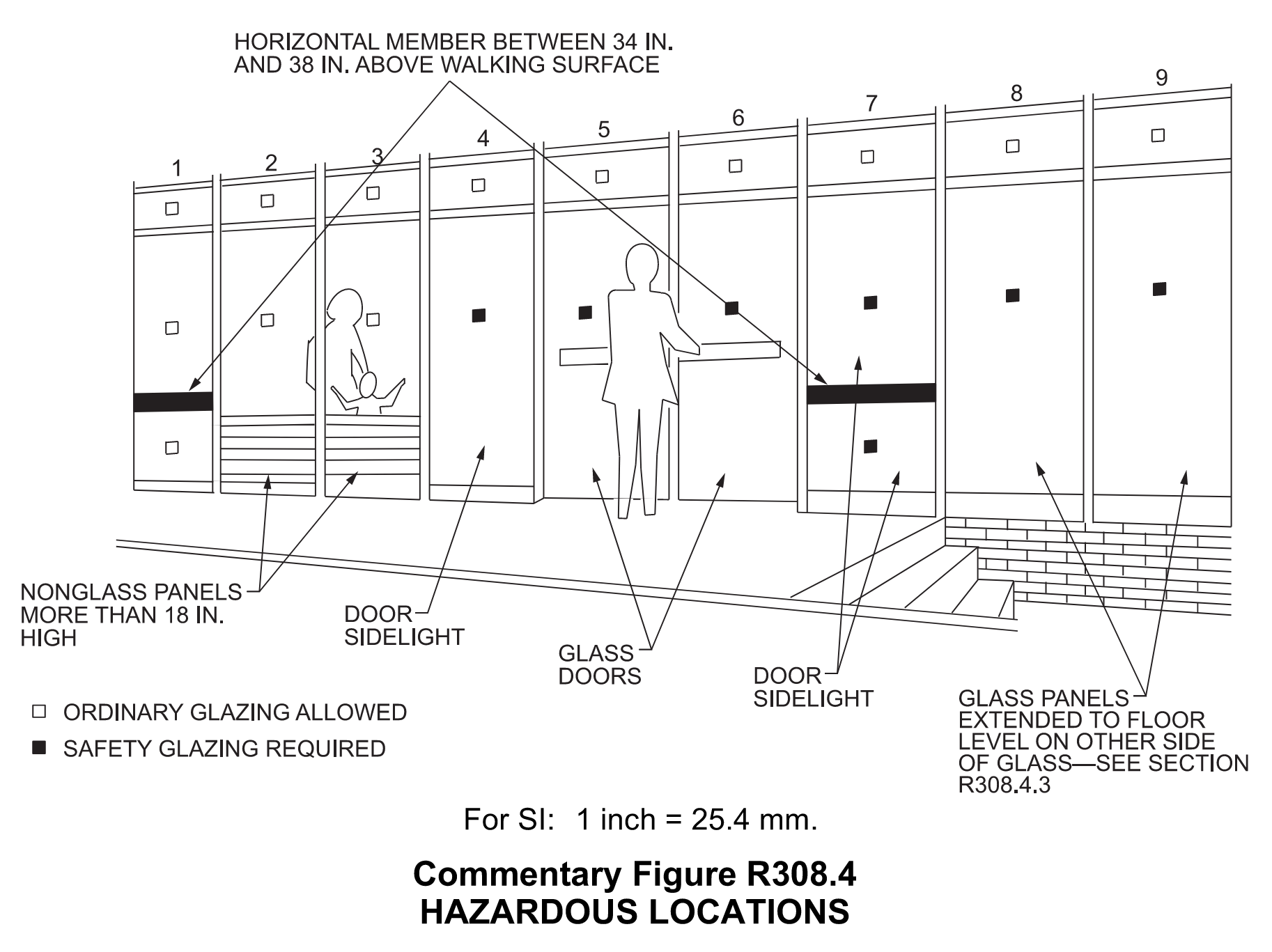
2021 Commentary Figure R308.4 – Hazardous Locations
Source: International Code Council, 2021 International Residential Code Code and Commentary, Volume 1.
R308.4.1 Glazing in doors.
Glazing in fixed and operable panels of swinging, sliding and bifold doors shall be considered to be a hazardous location.
Exceptions:
-
-
- Glazed openings of a size through which a 3-inch-diameter (76 mm) sphere is unable to pass.
- Decorative glazing.
-
R308.4.2 Glazing adjacent to doors
Glazing in an individual fixed or operable panel adjacent to a door shall be considered to be a hazardous location where the bottom exposed edge of the glazing is less than 60 inches (1524mm) above the floor or walking surface and it meets either of the following conditions:
-
-
- Where the glazing is within 24 inches (610 mm) of either side of the door in the plane of the door in a closed position.
- Where the glazing is on a wall less than 180 degrees (3.14 rad) from the plane of the door in a closed position and within 24 inches (610 mm) of the hinge side of an in-swinging door.
-
Exceptions:
-
-
- Decorative glazing.
- Where there is an intervening wall or other permanent barrier between the door and the glazing.
- Where access through the door is to a closet or storage area 3 feet (914 mm) or less in depth. Glazing in this application shall comply with Section R308.4.3.
- Glazing that is adjacent to the fixed panel of patio doors.
-
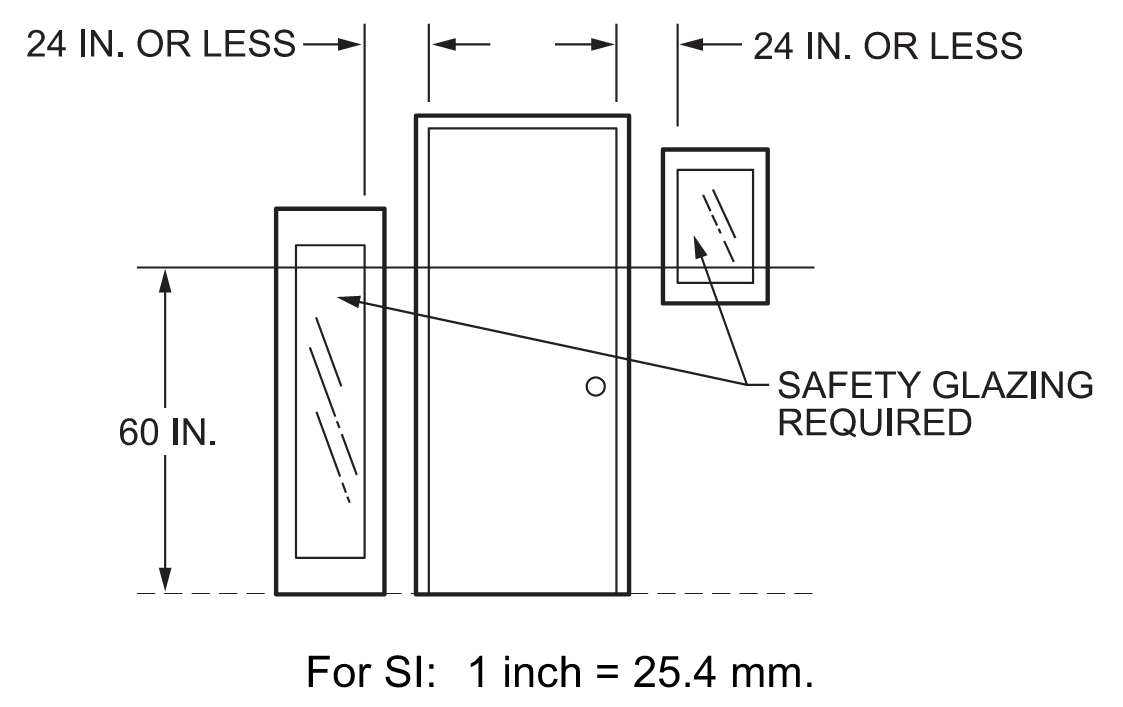
2021 Commentary Figure R308.4.2(1) – Glazing in Panels Adjacent to Doors, Elevation
Source: International Code Council, 2021 International Residential Code Code and Commentary, Volume 1.
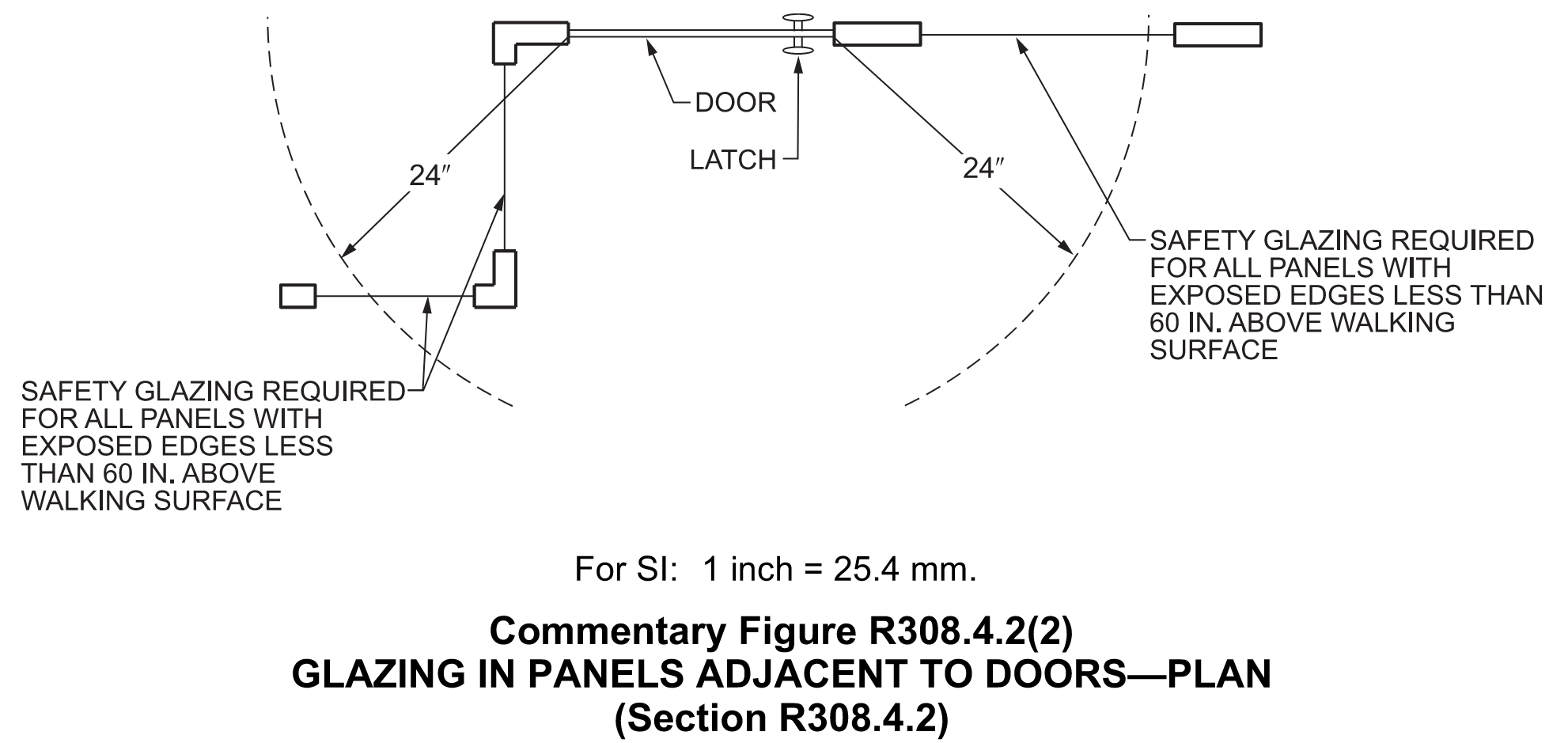
2021 Commentary Figure R308.4.2(2) – Glazing in Panels Adjacent to Doors, Plan
Source: International Code Council, 2021 International Residential Code Code and Commentary, Volume 1.
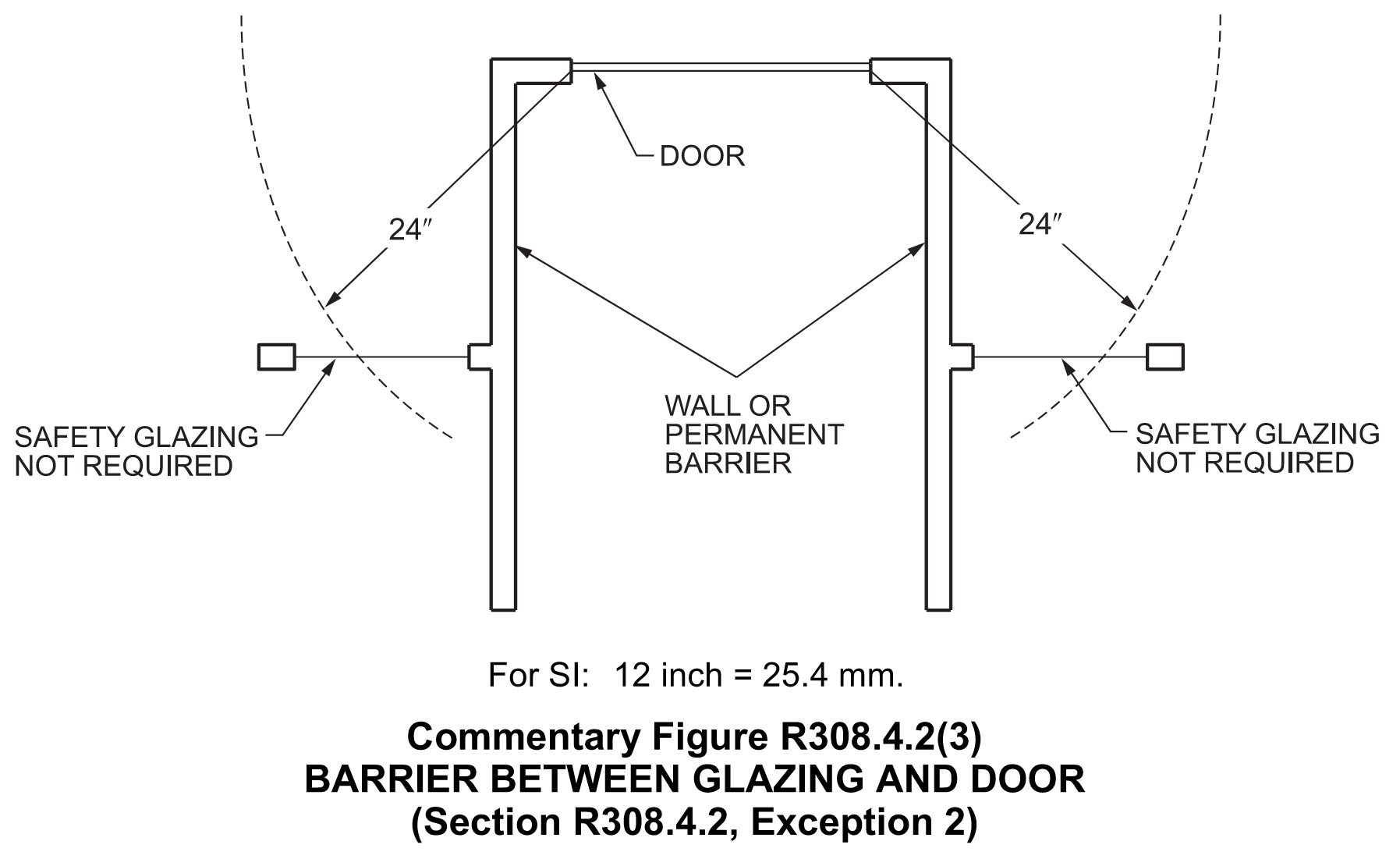
2021 Commentary Figure R308.4.2(3) – Barrier Between Glazing and Door
Source: International Code Council, 2021 International Residential Code Code and Commentary, Volume 1.
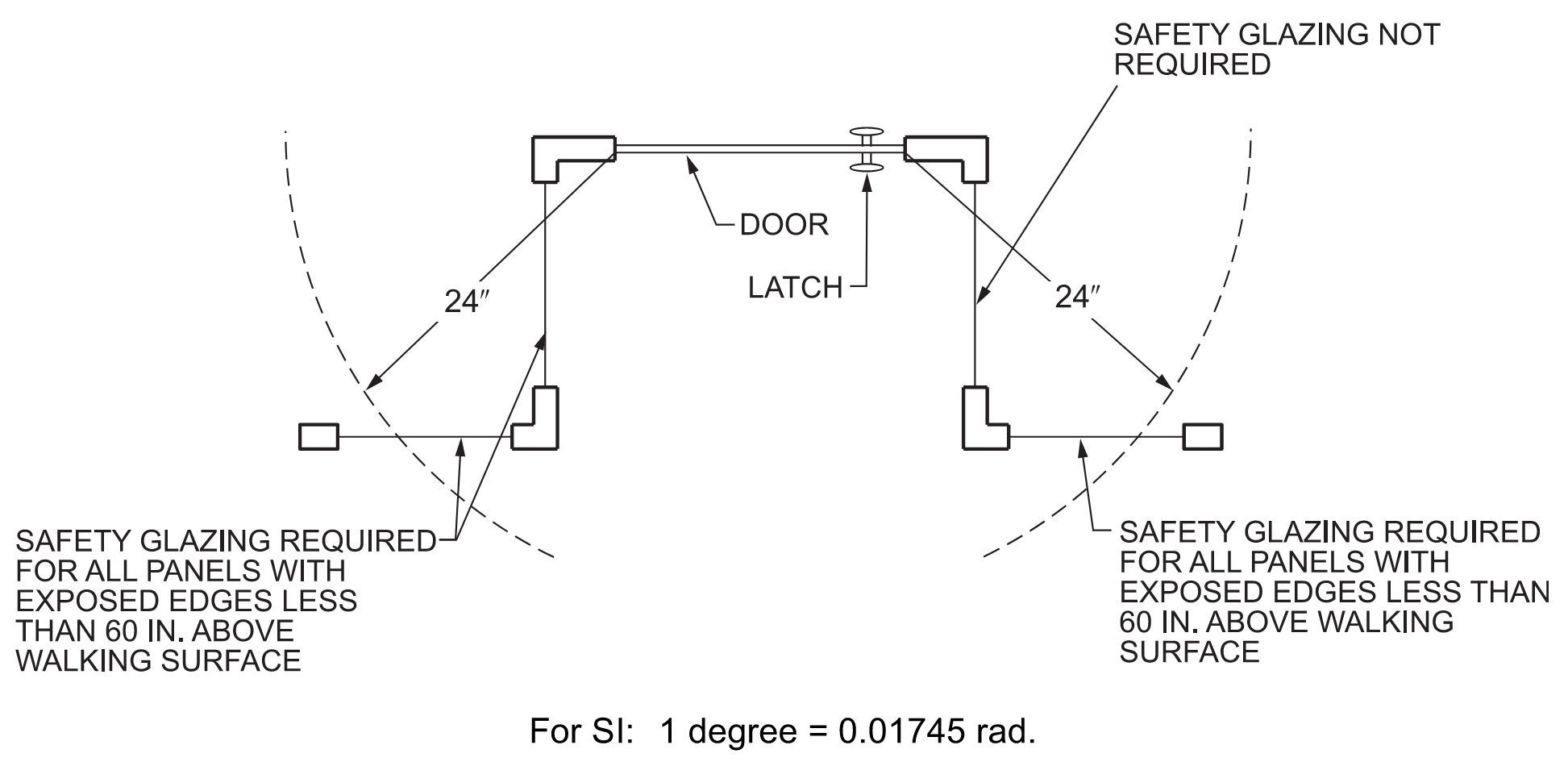
2021 Commentary Figure R308.4.2(4) – Glazing in Panels Adjacent to Doors, Plan
Source: International Code Council, 2021 International Residential Code Code and Commentary, Volume 1.
R308.4.3 Glazing in windows.
Glazing in an individual fixed or operable panel that meets all the following conditions shall be considered to be a hazardous location:
-
-
- The exposed area of an individual pane is larger than 9 square feet (0.836 m2).
- The bottom edge of the glazing is less than 18 inches (457 mm) above the floor.
- The top edge of the glazing is more than 36 inches (914 mm) above the floor.
- One or more walking surfaces are within 36 inches (914 mm), measured horizontally and in a straight line, of the glazing.
-
Exceptions:
-
-
- Decorative glazing.
- Where glazing is adjacent to a walking surface and a horizontal rail is installed 34 to 38 inches (864 to 965 mm) above the walking surface. The rail shall be capable of withstanding a horizontal load of 50 pounds per linear foot (730 N/m) without contacting the glass and have a cross-sectional height of not less than 1 1/2 inches (38 mm).
- Outboard panes in insulating glass units and other multiple glazed panels where the bottom edge of the glass is 25 feet (7620 mm) or more above grade, a roof, walking surfaces or other horizontal [within 45 degrees (0.79 rad) of horizontal] surface adjacent to the glass exterior.
-
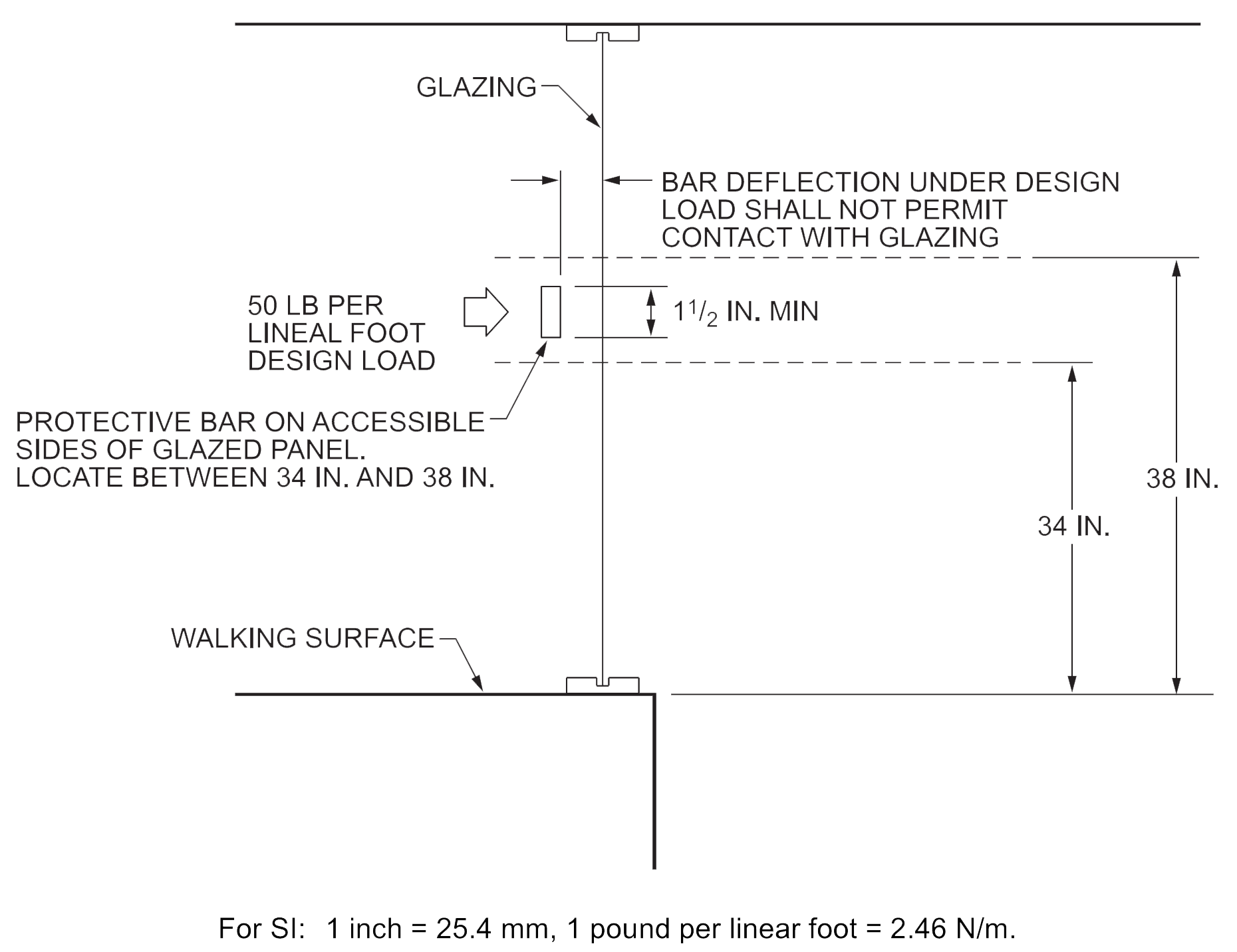
2021 Commentary Figure R308.4.3 – Protective Bar Alternative
Source: International Code Council, 2021 International Residential Code Code and Commentary, Volume 1.
R308.4.4 Glazing in guards and railings.
Glazing in guards and railings, including structural baluster panels and nonstructural in-fill panels, regardless of area or height above a walking surface shall be considered to be a hazardous location.
R308.4.4.1 Structural glass baluster panels.
Guards with structural glass baluster panels shall be installed with an attached top rail or handrail. The top rail or handrail shall be supported by not less than three glass baluster panels or shall be otherwise supported to remain in place should one glass baluster fail.
Exception:
An attached top rail or handrail is not required where the glass baluster panels are laminated glass with two or more glass plies of equal thickness and of the same glass type.
R308.4.5 Glazing and wet surfaces.
Glazing in walls, enclosures or fences containing or adjacent to hot tubs, spas, whirlpools, saunas, steam rooms, bathtubs, showers and indoor or outdoor swimming pools where the bottom exposed edge of the glazing is less than 60 inches (1524 mm) measured vertically above any standing or walking surface shall be considered to be a hazardous location. This shall apply to single glazing and each pane in multiple glazing.
Exception:
Glazing that is more than 60 inches (1524 mm), measured horizontally, from the water’s edge of a bathtub, hot tub, spa, whirlpool or swimming pool or from the edge of a shower, sauna or steam room.
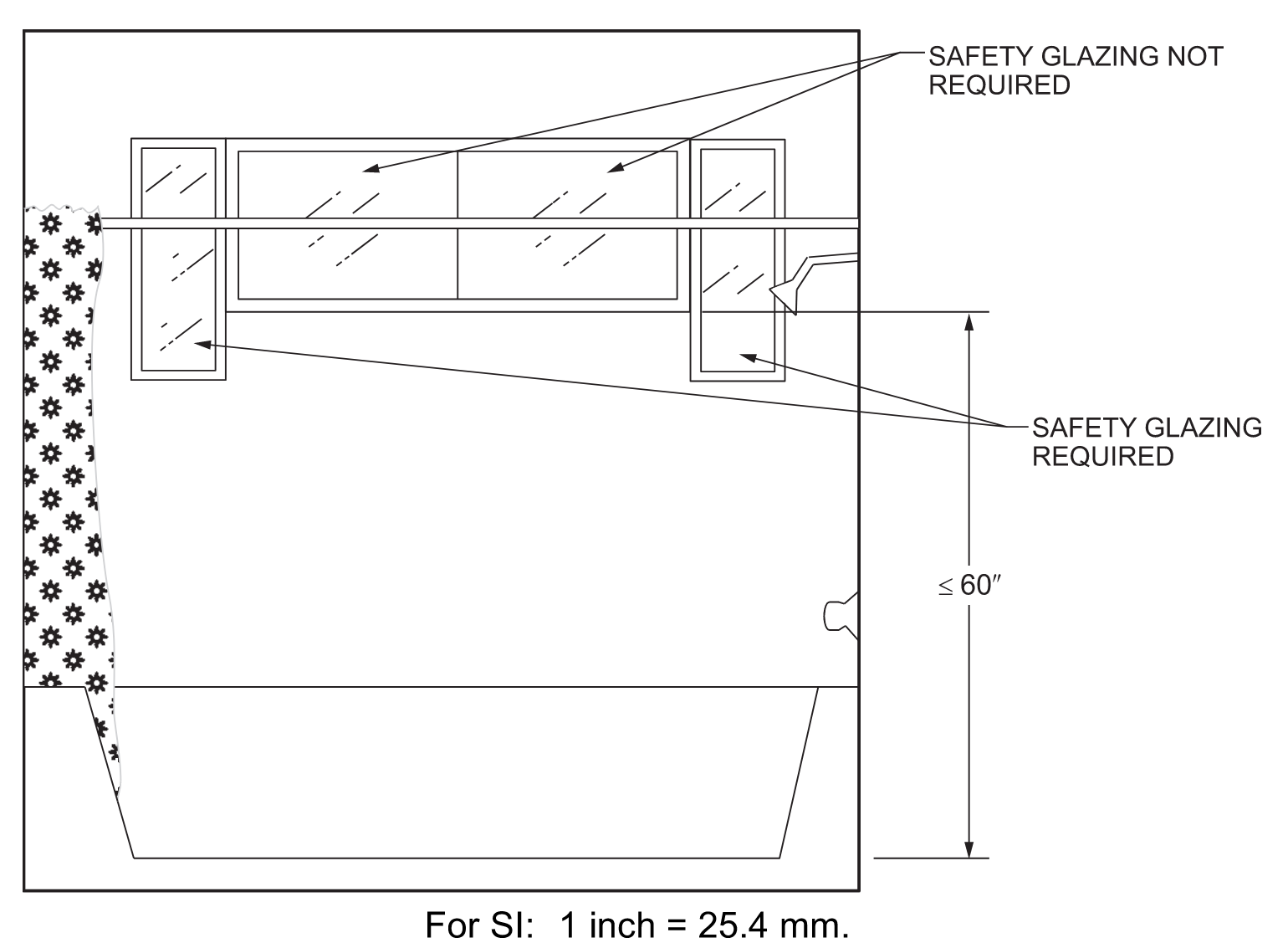
2021 Commentary Figure R308.4.5(1) – Glazing Within a Shower Enclosure
Source: International Code Council, 2021 International Residential Code Code and Commentary, Volume 1.
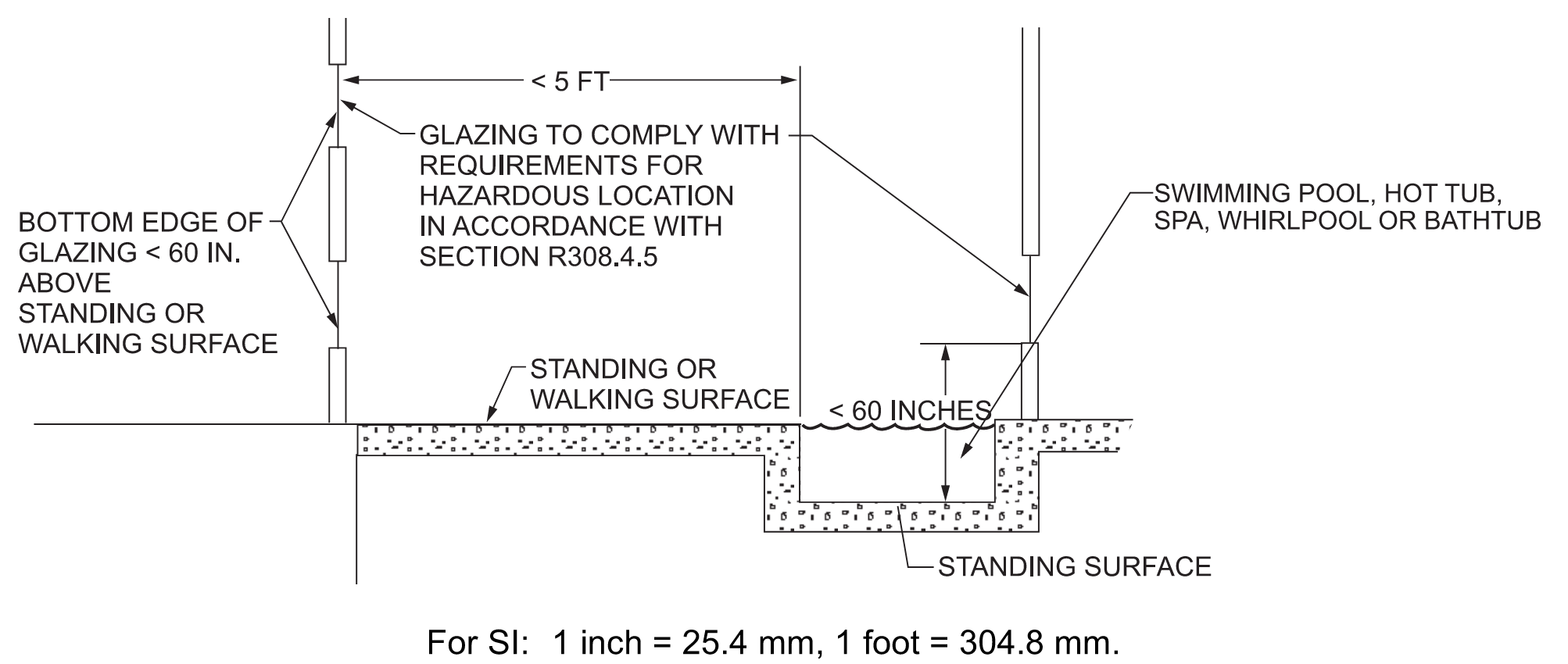
2021 Commentary Figure R308.4.5(2)
Glazing in Wet Areas Adjacent to Hot Tubs, Spas, Whirlpools, Saunas, Steam Rooms, Bathtubs, Showers and Swimming Pools
Source: International Code Council, 2021 International Residential Code Code and Commentary, Volume 1.
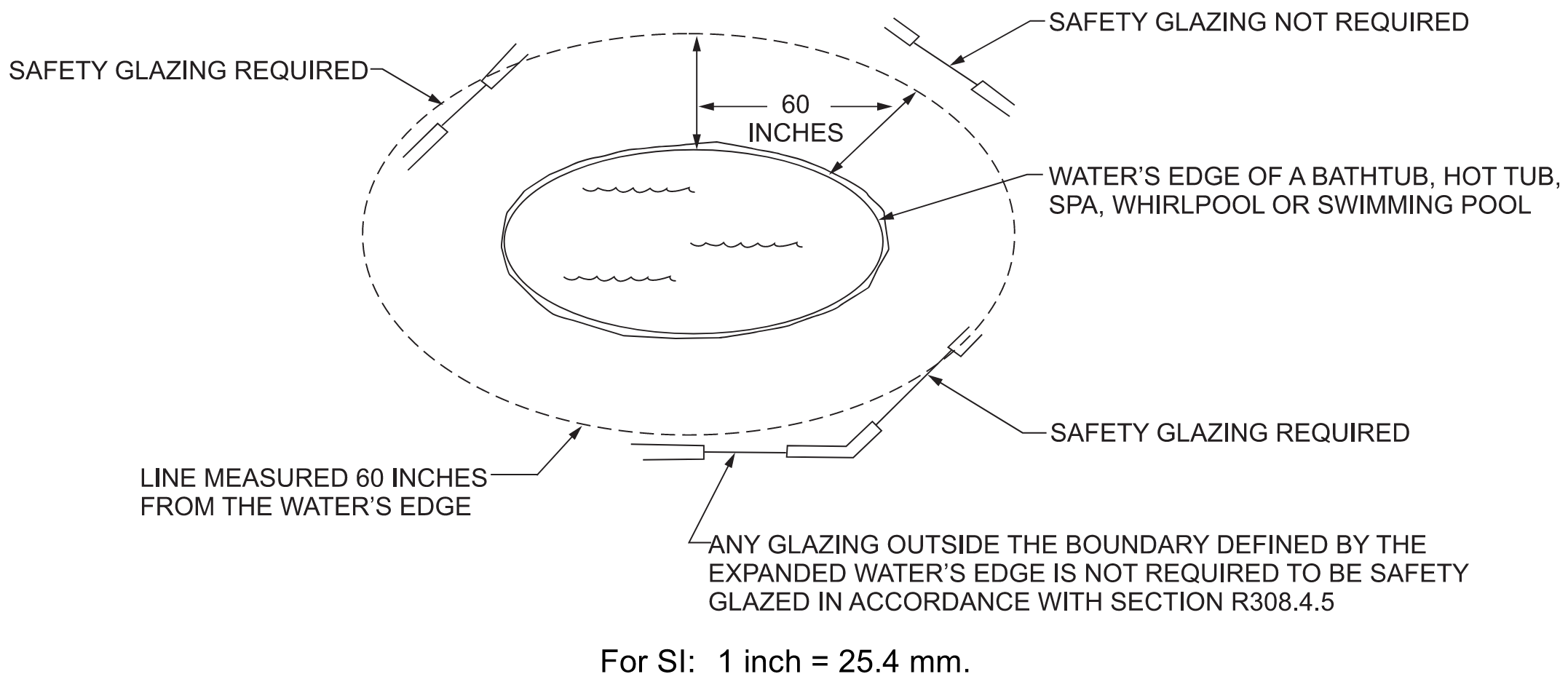
2021 Commentary Figure R308.4.5(3) – Glazing and Wet Surfaces, Plan View
Source: International Code Council, 2021 International Residential Code Code and Commentary, Volume 1.
R308.4.6 Glazing adjacent to stairs and ramps.
Glazing where the bottom exposed edge of the glazing is less than 36 inches (914 mm) above the plane of the adjacent walking surface of stairways, landings between flights of stairs and ramps shall be considered to be a hazardous location.
Exceptions:
-
-
- Where glazing is adjacent to a walking surface and a horizontal rail is installed at 34 to 38 inches (864 to 965 mm) above the walking surface. The rail shall be capable of withstanding a horizontal load of 50 pounds per linear foot (730 N/m) without contacting the glass and have a cross-sectional height of not less than 1 1/2 inches (38 mm).
- Glazing 36 inches (914 mm) or more measured horizontally from the walking surface.
-
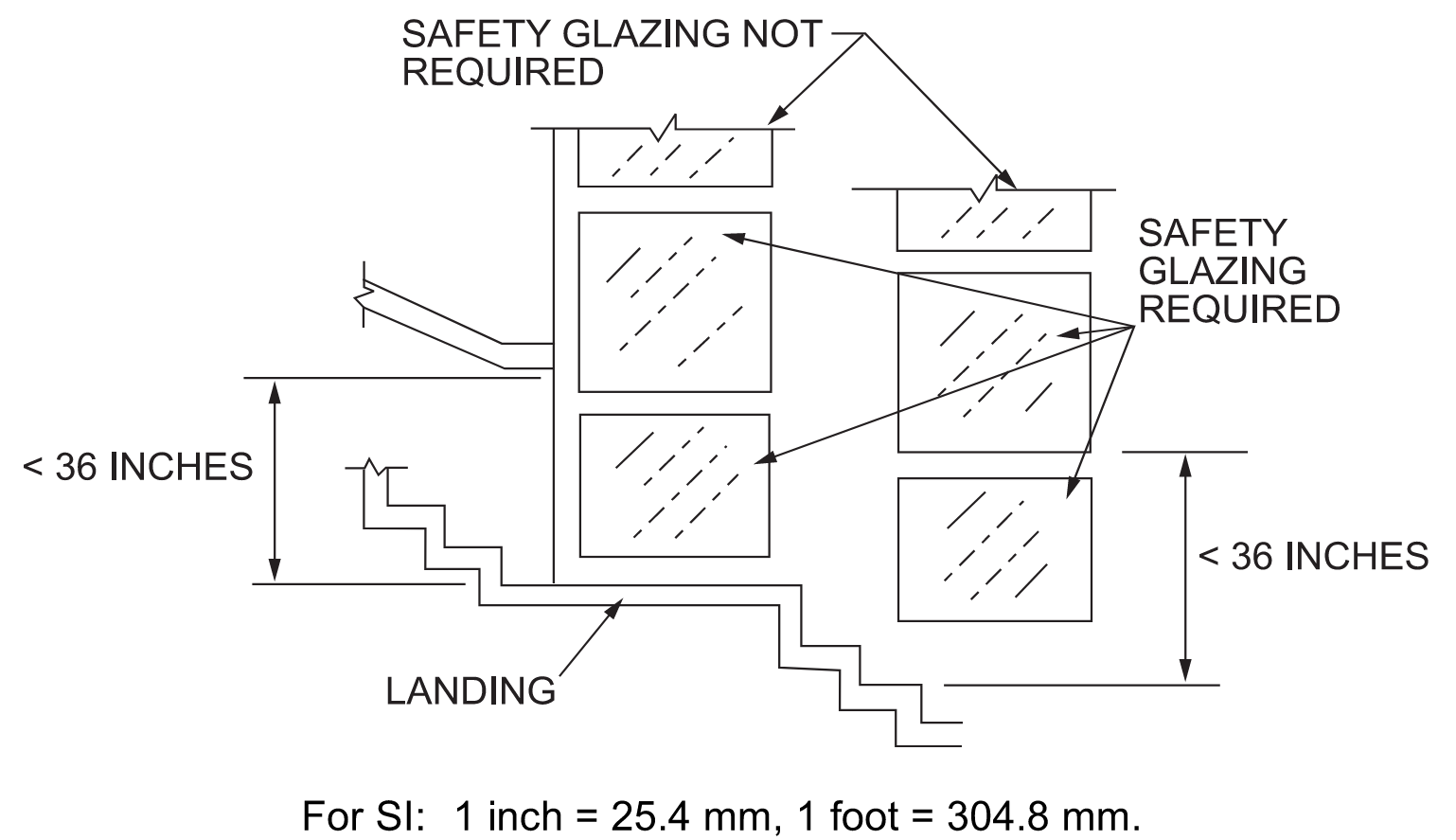
2021 Commentary Figure R308.4.6 – Glazing Adjacent to Stairways
Source: International Code Council, 2021 International Residential Code Code and Commentary, Volume 1.
R308.4.7 Glazing adjacent to the bottom stair landing.
Glazing adjacent to the landing at the bottom of a stairway where the glazing is less than 36 inches (914 mm) above the landing and within a 60-inch (1524 mm) horizontal arc less than 180 degrees (3.14 rad) from the bottom tread nosing shall be considered to be a hazardous location. (see Figure R308.4.7).
Exception:
Where the glazing is protected by a guard complying with Section R312 and the plane of the glass is more than 18 inches (457 mm) from the guard.
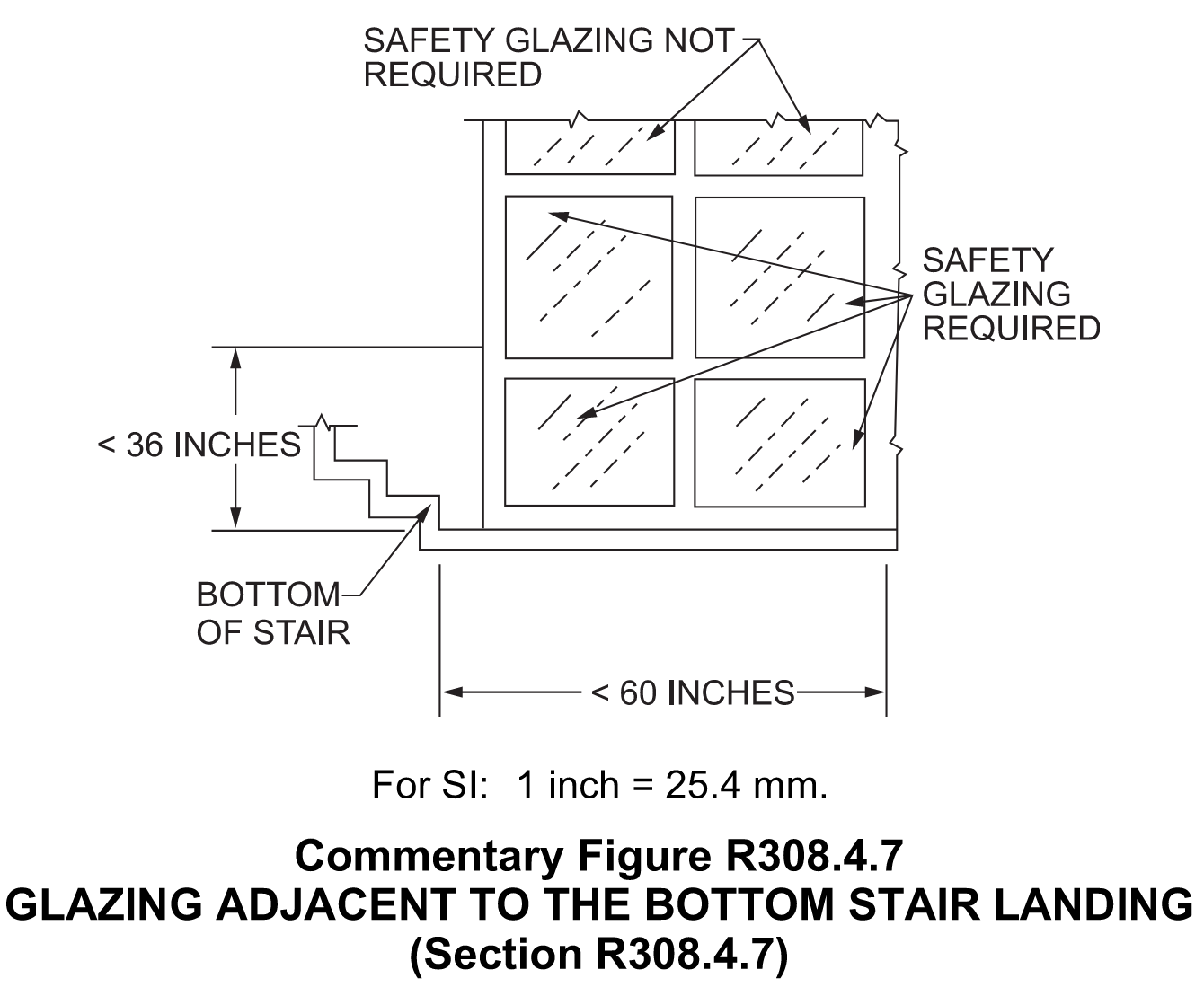
2021 Commentary Figure R308.4.7 – Glazing Adjacent to the Bottom of the Stair Landing
Source: International Code Council, 2021 International Residential Code Code and Commentary, Volume 1.
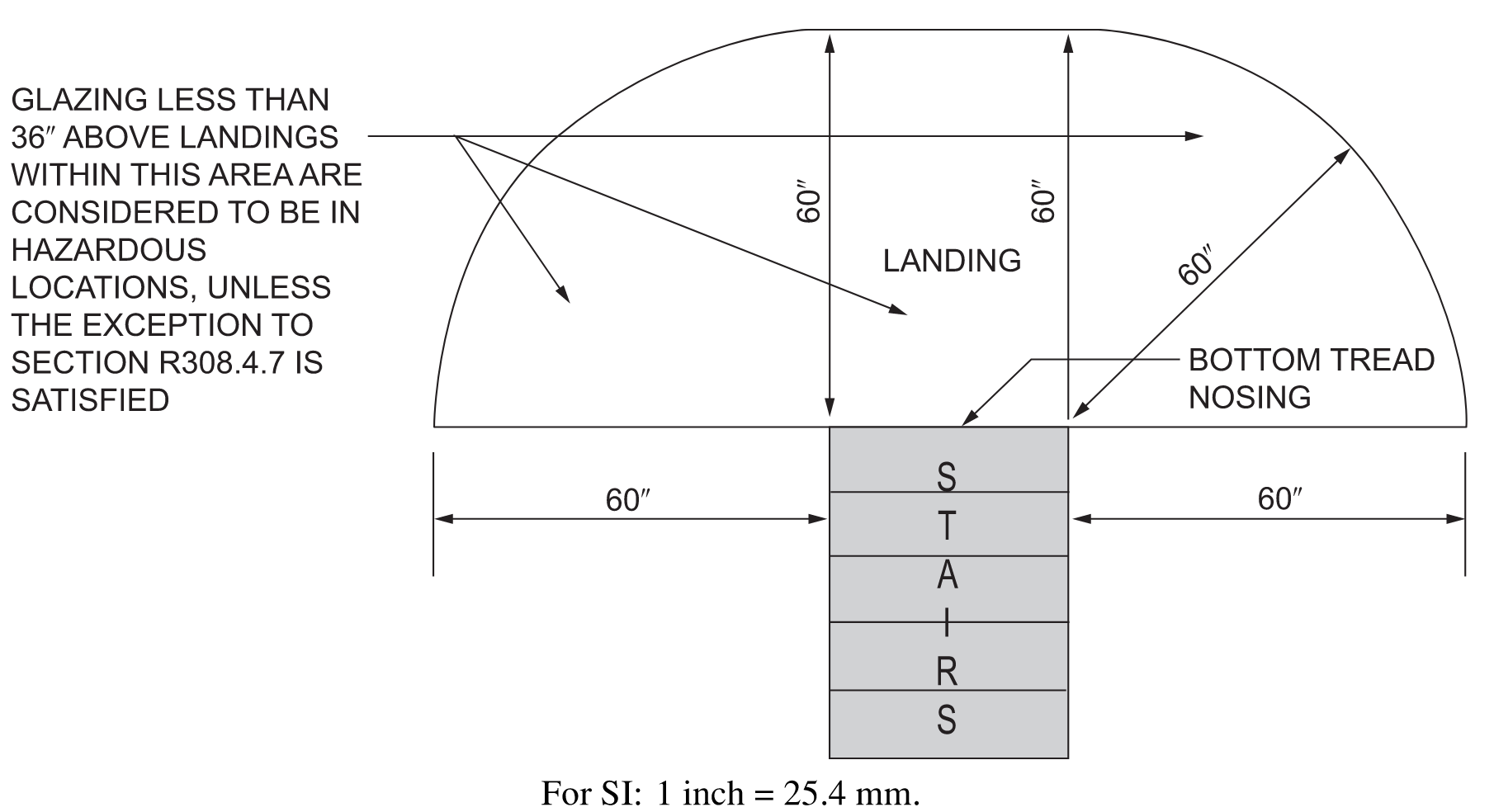
2021 Figure R308.4.7 – Hazardous Glazing Locations at Bottom Stair Landings
Source: International Code Council, 2021 International Residential Code Code and Commentary, Volume 1.
This Publication is Printable