

Soil Health Initiative
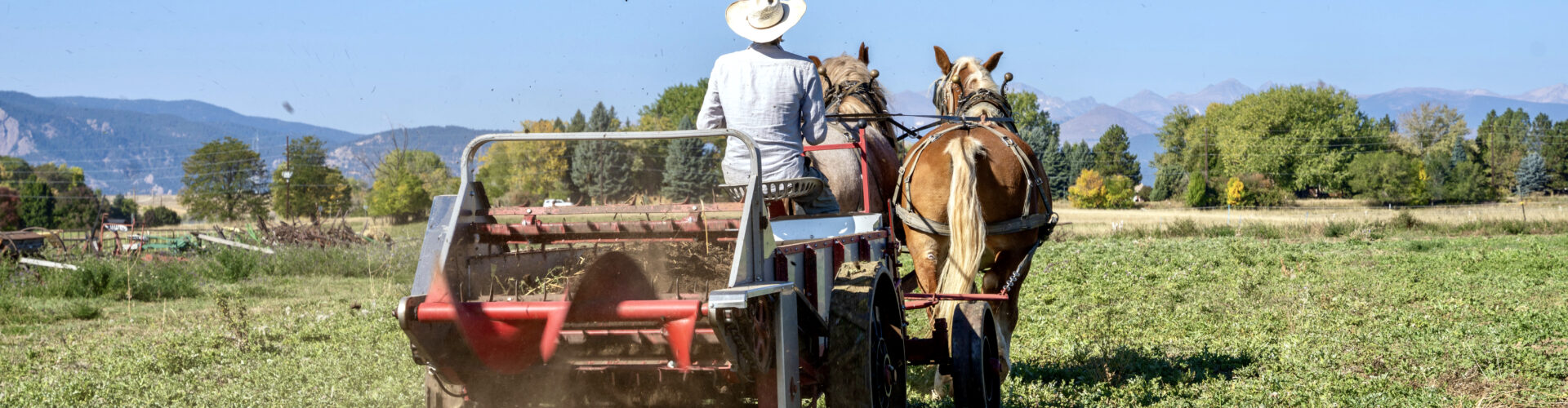
Two horses pull a red compost cart across a field at Light Root Community Farm in Boulder. A man drives the cart, holding the reins as the horses move away from the camera.

Boulder County Soil Health Initiative

The Soil Health Initiative supports farmers and ranchers who choose to improve soil health and promote a local, sustainable, and resilient food system. Projects must align with USDA soil health principles, such as minimizing soil disturbance, maximizing soil cover, increasing plant diversity, and incorporating livestock. Up to $660,000 in grants are available.

The Soil Health Initiative application for private lands opened on Dec. 8 and will close on Wednesday, Jan. 7, 2026. Farmers and ranchers operating on Boulder County-owned land will apply through a separate application that will open later in December.

This program compliments Boulder County’s Sustainable Food and Agriculture Fund, which focuses on education, market infrastructure, processing, and support for frontline farm workers.

2026 Funding

There is $660,000 available for the Soil Health Initiative grant program.

Grant Eligibility

  • Applicants must have been operating a farm or ranch in Boulder County for at least two years.
  • Applicants may only submit one application.

Eligible practices include but are not limited to:

  • No- or reduced-tillage
  • Utilizing cover crops
  • Rotational grazing and/or crop rotation

Boulder County will make awards based on how well applicants incorporate USDA’s principles to improve soil health, including:

  • Increasing soil surface cover
  • Increasing plant diversity
  • Increasing livestock integration
  • Minimizing soil and chemical disturbance
  • Keeping a live root in the ground

How to Apply

The application will open on Dec. 8, 2025 and close on Jan. 10, 2026.

Please review the Soil Health Initiative Application Packet to draft your answers before submitting your application.

Apply online.

Additional Program Information

The Boulder County Healthy Soils Initiative aims to empower the agricultural community to both adapt to climate change and contribute to climate solutions. The program is possible thanks to partnerships with the Colorado Department of Agriculture, Colorado State University Extension, OpenTEAM, Zero Foodprint, and Wolfe’s Neck Center for Agriculture and the Environment.

Previous Grants

Miraflora Wagyu – $30,000

Miraflora Wagyu will use funds to upgrade their infrastructure and implement regenerative practices to improve pasture health across 230 acres. Their focus will be on integrating prescribed grazing and tree/shrub establishment, which will be watered by infrastructure upgrades to their irrigation system and the introduction of herbaceous wind barriers.

Fentress LLC – $77,450

Fentress LLC will use funding to purchase equipment that will restore 160 acres of degraded soil. The equipment purchased will help to remove prairie dog pressure, add soil amendments, and restore efficient irrigation. In addition, livestock equipment will improve managed grazing and productivity. This project will prevent future soil degradation and contribute to the long-term viability of the farm.

Farmer Johns – $48,000

Farmer Johns will use funding to purchase a Esch no-till drill that will more efficiently plant grain and cover crops on 600 acres. This tool limits soil disturbance while planting crops, which contributes to improved soil health.

r7 Farms – $47,000

r7 Farms will use funding to purchase equipment that will enhance soil fertility. This equipment will allow the farm to more efficiently transport cattle between pastures, manage grazing pressures on the land, and spread the nutrients provided from grazing. These regenerative grazing practices will not only lower input costs, but will improve soil health and enhance the quality of their yields.

Drylands Agroecology Research – $50,000

Dryland Agroecology Research (DAR) aims to scale their grazing research by growing management from 164 acres to 609 acres. They will use funding to purchase equipment that improves the efficiency of transporting cattle and sheep, and that supports a larger herd size. Their research will continue to fill knowledge gaps regarding how using high-intensity, nonselective, and holistically planned grazing improves ecology, livestock health, and the production of nutritious local food.

Richard A Biella – $69,100

Richard A Biella will use funds to purchase a manure spreader to spread cow manure on over 300 acres of hay producing farmland. This will allow them to reduce the amount of synthetic nitrogen fertilizer, thereby improving soil health. Additionally, funding will be used to enhance their irrigation system, allowing it to reach inaccessible sections of their fields and maximize the use of water in a more efficient manner.

Rough and Ready Farm LLC – $48,000

Rough and Ready Farm LLC will use funding to cover 15 acres of their vegetable farm with nutrient rich mineralized compost, which will enhance crop performance and nutrient cycling. Additionally, funding will be used to purchase a water reel irrigation system that will allow more cover crops into their crop rotation. These implementations will allow for a greater diversity of multifunctional cover crops.

Common Name Farm LLC – $42,803

Common Name Farm LLC aims to enhance the efficiency of their irrigation system, increase their compost application, and reduce tillage on their 14.5-acre farm. To do so, they will purchase a no-till seed drill that will improve cover crop sowing, a compost spreader to spread bison manure on their vegetable beds, and irrigation pipes to route ditch water to fields and pasture. Additionally, they will plant a windbreak along their field and establish a robust crop of white Dutch clover in the aisles for greater soil cover and weed suppression.

The Golden Hoof LLC – $65,797

The Golden Hoof LLC will use funding to convert its grass pastures into a diversified agroforest that will improve their rotational grazing infrastructure, enhance pollinator and wildlife habitat, and produce more cash crops. The transformation towards more complex and high-functioning ecosystem microclimates will improve climate resilience and carbon capture on the farm.

Esterra Culinary – $50,000

Esterra Culinary aims to demonstrate the culinary possibilities of perennial crops in intensive management to provide ecosystem benefits and farm business resilience. They will use funding to install a half mile of no-till perennial polyculture beds, in addition to a new 10-acre syntropic agroforest.

Grama Grass & Livestock – $59,525

Grama Grass & Livestock aims to improve ecosystem health on degraded lands. Aligned with this mission, this project will increase herd size and speed of rotational grazing across 450 acres, create soil management plans for four properties, and share regenerative ranching practices via educational videos.

Colorado Camel Milk – $46,500

Colorado Camel Milk will use funds to purchase a Esch no-till drill that is equipped with a liquid application system. This tool limits soil disturbance when planting cash crops and contributes compost tea and natural biofertilizer, creating an environment that improves soil biology. Furthermore, a portable milking parlor will increase rotational grazing on 20 acres of erodible dryland.

Laughing Coyote Project – $40,000

The Laughing Coyote Project will implement bioswales to increase water distribution and retention. 4,000 hardy fruit and nut-producing trees will be planted along the bioswales to provide alternative livestock feed and food for humans, creating a robust and resilient system. The funding will also be used to purchase infrastructure to increase the creation and application of quality compost, contributing to a highly biodiverse ecosystem.

MetaCarbon Farm – $38,000

MetaCarbon Farm will improve soil health and structure through the implementation of biofertilizers, compost, biochar, and rotational grazing on 40 acres. These additions will increase vegetable and livestock production, reduce costs, and expand the availability of nutrient dense food in our local community.

Jacob Springs Farm – $33,389

Jacob Springs Farm will use funding to transition away from traditional tillage methods and implement a polyculture, low-tillage system that better protects soil. They will purchase equipment to improve manure fertilizer management and build extra fencing infrastructure for rotational grazing on 280 acres of private land, which will help to close the fertility loop between the livestock and grain fields.

Farmette Flowers LLC DBA Artemis Flower Farm – $57,000

Artemis Flower Farm will expand compost application, low tillage farming practices, nontoxic weed management, and cover cropping to all 17 acres of their flower-growing farm. Equipment will be shared with up to 7 neighboring beginning farmers, ensuring that the implementation of soil health practices is advanced equitably throughout the community.

Father Earth Organic Farm – $14,248

Father Earth Organic Farm will reduce soil compaction by downsizing equipment impacts and improve soil health through organic amendments, compost materials, and cover crops on a market garden. These efforts to enhance soil health and fertility will increase plant diversity and production on those clay areas.

Boulder Mushroom – $50,000

Boulder Mushroom will utilize locally generated biological methods for improving soil health at the field scale. The project aims to promote sustainable land management practices while creating a sustainable and productive use for the large quantities of unmarketable forestry biomass generated in Boulder County. This project will include the inoculation of forestry and on-farm woody biomass to speed the decomposition of litter cover and will increase the available organic matter through 8 farm partnerships and 107 acres.

Light Root Community Farm – $43,800

Light Root Community Farm will use funds to support a regenerative grazing system and micro-dairy operations with draft horse powered hay baling equipment. By maximizing hay production to allow for higher rates of rotational grazing and enhancing water impacts on 37 acres of dairy production, the farm will be able to better support overall soil health.

Wild Nectar Farm – $69,551.52

By purchasing electric fences, a working chute system, and a livestock trailer with 80 sheep capacity, Wild Nectar Farm will increase operational efficiency and growth. This partnership project will improve soil health on 70 acres of silvopasture through high rotational grazing of sheep.

Buckner Family Ranch – $47,072

Buckner Family Ranch, in partnership with neighboring DeBruyne and Dorfman ranchers, will improve soil health by repairing a ditch that brings water to 60 acres of unusable ranch lands. Once reestablished, the lands will be utilized for high rotational cattle grazing.

Contact Us

For questions about applications that include BCPOS land:

Cassandra Schnarr
Boulder County Parks & Open Space
Resource Program Supervisor — Agriculture
cschnarr@bouldercounty.gov

For questions about applications on private land only:

Tim Broderick
Boulder County Office of Sustainability, Climate Action, and Resilience
Senior Sustainability Strategist
broderick@bouldercounty.gov